
Joseph Ahmadi
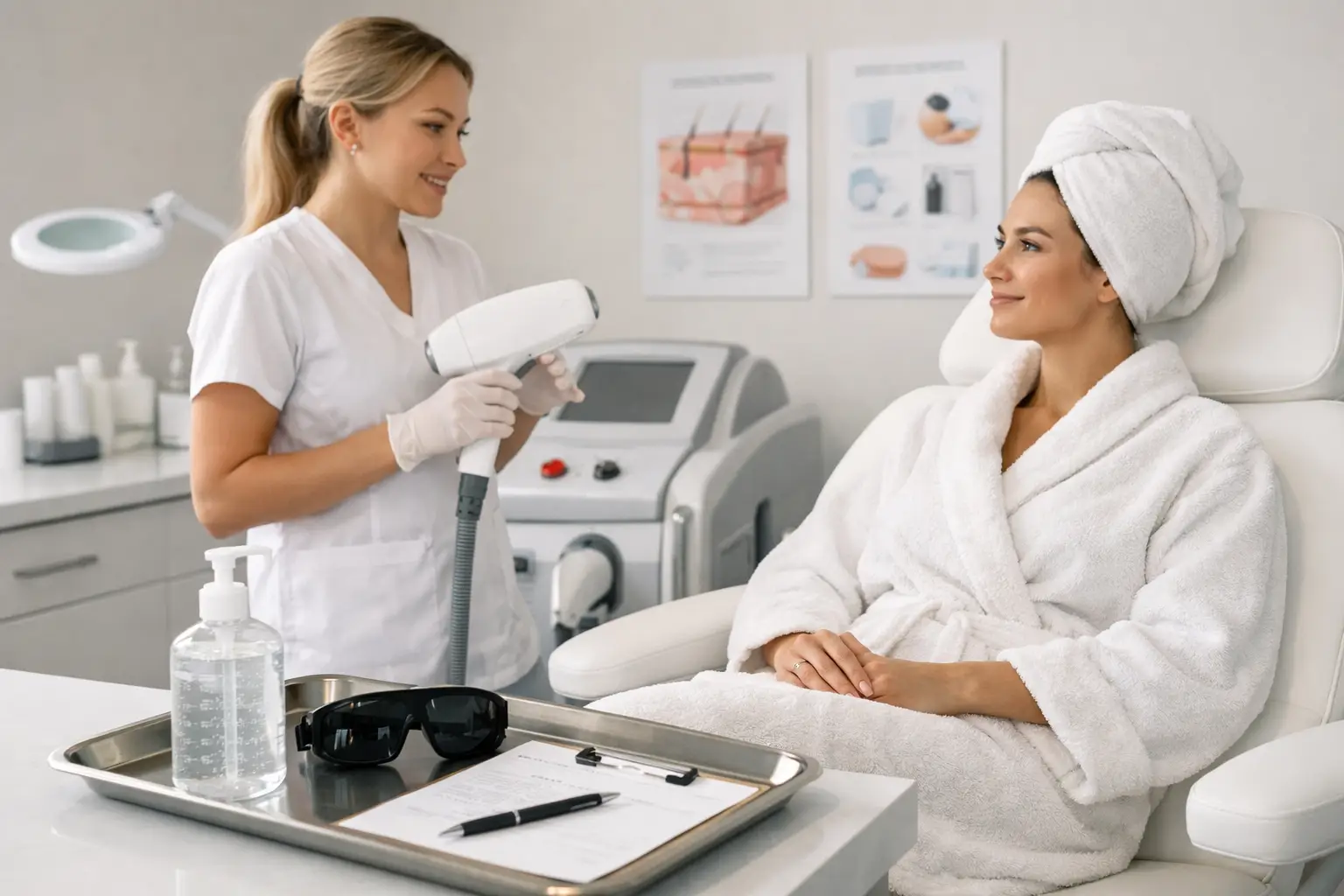
A fresh shave, a last-minute beach plan, a favorite dress that suddenly feels less effortless – unwanted intimate hair can make a small detail feel disproportionately inconvenient. Brazilian laser hair removal offers a more lasting alternative to frequent shaving and waxing, with a treatment plan designed around your comfort, skin tone, hair type, and personal grooming preferences.
At Clara Medical Spa in Thornhill, we treat clients from Thornhill, Vaughan, Richmond Hill, and across the greater Toronto area, using dual-wavelength laser technology matched to every skin tone.
This is not a one-size-fits-all service. Some clients want complete hair reduction across the bikini area, while others prefer to leave a small strip, triangle, or other shape. The goal is personal: smoother skin, less time spent managing hair, and the confidence that comes with feeling polished on your own terms.
What Brazilian Laser Hair Removal Includes
A Brazilian treatment generally addresses hair on the front bikini area, labia, and between the buttocks. Your provider will clarify the exact treatment area before your first session, because the term can mean slightly different things from one clinic to another. A standard bikini laser treatment, by comparison, typically focuses only on hair that would show outside a swimsuit.
The laser directs concentrated energy into the pigment in the hair follicle. That energy damages the follicle’s ability to produce new hair while aiming to protect the surrounding skin. Since hair grows in cycles, only follicles in an active growth stage respond effectively at each appointment. This is why a series of treatments is needed rather than a single visit.
Laser hair removal is best described as long-term hair reduction, not a guarantee that every hair will disappear forever. Many clients see a significant and lasting decrease in growth, with the remaining hair becoming finer, lighter, and easier to manage. Occasional maintenance appointments may be helpful over time, especially when hormones affect hair growth.
Is It Right for You?
The ideal candidate is not defined by gender or a particular grooming style. Brazilian laser hair removal can be an excellent choice for adults who are tired of razor bumps, ingrown hairs, waxing appointments, or the irritation that follows daily shaving. It is also a practical option for people who simply want to reduce the time and effort involved in their routine.
Hair color, skin tone, medical history, and current medications all matter. Laser energy is attracted to pigment, so dark, coarse hair often responds especially well. Very light blond, gray, white, or red hair may be less responsive because there is less pigment for the laser to target.
Clients with deeper skin tones can be treated safely when the provider uses appropriate technology, conservative settings, and careful clinical judgment. The right device and settings are essential. A qualified consultation should never treat skin tone as an afterthought.
Pregnancy, active skin infections, open wounds, recent sun exposure, certain medications, and a history of pigment changes may affect when treatment can be performed. Your provider should review these details before creating a plan. A patch test may also be recommended to assess how your skin responds.
A Private, Professional Treatment Experience
For many first-time clients, privacy is the biggest concern. A professional medical aesthetics clinic should make the experience discreet, respectful, and matter-of-fact. Your provider will explain positioning, confirm the areas you would like treated, and work efficiently while protecting your comfort.
The treatment itself is brief, often taking 15 to 30 minutes depending on the area and the amount of hair present. Most modern laser systems include cooling features to reduce discomfort. Clients commonly describe the sensation as a quick snap of heat, similar to a rubber band against the skin. Sensitive areas can feel more intense, but the sensation passes quickly.
If you are nervous, say so before treatment begins. A skilled provider can adjust the pace, review comfort options, and let you know what to expect before each area is treated. Feeling informed tends to make the appointment much easier.
How Many Sessions Will You Need?
Most people need a series of six to eight treatments, typically spaced about four to six weeks apart at the beginning. Your exact schedule may change based on your hair growth cycle, the area treated, hormonal factors, and how your skin responds.
You may notice that treated hairs begin shedding one to three weeks after a session. This is expected and can look like new growth at first, but the hair is often working its way out of the follicle. Avoid plucking or waxing between visits, since the laser needs the hair root present to target it effectively. Shaving is usually permitted and often encouraged.
Results build gradually. After the first few sessions, many clients report slower regrowth and softer, patchier hair. By the end of a recommended series, the difference can be substantial. Still, realistic expectations matter: hormonal changes, conditions such as polycystic ovary syndrome, and individual genetics can create a need for periodic touch-ups.
Preparing for Your Appointment
A little preparation supports both safety and results. Shave the treatment area about 12 to 24 hours before your appointment unless your provider gives different instructions. The hair should be short above the skin while the follicle remains intact below it.
Avoid waxing, tweezing, threading, or using depilatory creams for several weeks beforehand. You should also limit tanning, self-tanner, and prolonged sun exposure before treatment, as extra pigment in the skin can increase sensitivity and affect laser settings.
Arrive with clean skin free from lotions, oils, fragrances, or numbing products unless those products were specifically approved by your provider. Wear loose, breathable clothing for comfort afterward. If you take prescription medications, use retinoids, or have recently started a new skincare treatment, mention it during your consultation and again before each session.
Aftercare That Protects Your Skin
Mild warmth, redness, or small bumps around the follicles can occur shortly after treatment. These reactions are usually temporary and often settle within hours to a day or two. A cool compress and a gentle, fragrance-free moisturizer can feel soothing.
For the first 24 to 48 hours, avoid hot baths, saunas, steam rooms, intense workouts, and friction from tight clothing when possible. Skip exfoliating acids, scrubs, and other potentially irritating products on the treated area until your skin feels calm. If the area may be exposed to sunlight, use appropriate sun protection as directed by your provider.
Do not pick at shedding hairs or exfoliate aggressively. Gentle exfoliation can be introduced later if your provider recommends it, particularly if you are prone to ingrown hairs. Contact your clinic if you experience prolonged discomfort, blistering, significant swelling, or any reaction that concerns you.
Why Provider Expertise Matters
An intimate-area laser treatment deserves the same level of clinical care as any other aesthetic procedure. Results depend on more than the machine. The provider must understand hair and skin biology, select settings thoughtfully, recognize contraindications, and monitor your skin throughout the process.
At Clara Medical Spa, treatment planning is built around physician-led expertise and individualized care. That means discussing not only what you want removed, but also what will help you feel safe, comfortable, and confident throughout your series.
The lowest price is not always the best value if it means rushed appointments, unclear treatment areas, or settings that are not tailored to your skin. A careful consultation, appropriate technology, and consistent provider guidance can make a meaningful difference in both your experience and your results.
Smooth skin should feel like a convenience, not a constant task on your calendar. If Brazilian laser hair removal fits your goals, begin with a consultation that gives you clear answers, a personalized plan, and the reassurance to move forward comfortably.
How Much Does Brazilian Laser Hair Removal Cost in Thornhill?
At Clara Medical Spa, Brazilian laser hair removal starts at $90 per session, with most clients completing 6–8 sessions for lasting results. We use the Cynosure Elite+ dual-wavelength system and the Alma Soprano ICE Platinum, switching between Alexandrite and Nd:YAG wavelengths to treat every skin tone safely and effectively — the reason our pricing reflects medical-grade equipment and physician-led care rather than a walk-in discount model. Book a free consultation for a personalized quote based on your treatment area and goals.
Frequently Asked Questions
Where can I get Brazilian laser hair removal near Thornhill?
Clara Medical Spa is located inside the Promenade Shopping Centre in Thornhill and treats clients from Thornhill, Vaughan, Richmond Hill, and across the greater Toronto area. Our physician-led team uses dual-wavelength laser technology suited to every skin tone.
How much does Brazilian laser hair removal cost in Thornhill and Vaughan?
Sessions start at $90, with most clients needing a series of 6–8 sessions spaced four to six weeks apart. Book a free consultation for a personalized quote.
Is Brazilian laser hair removal safe for all skin tones?
Yes. We use the Cynosure Elite+ dual-wavelength system, switching between the Alexandrite (755nm) and Nd:YAG (1064nm) wavelengths so treatment is matched to your specific skin tone, including deeper skin tones that require more careful wavelength selection.
How many sessions of Brazilian laser hair removal will I need?
Most clients need 6–8 sessions spaced about four to six weeks apart, though this can vary based on hair growth cycle, hormonal factors, and how your skin responds.
Does Brazilian laser hair removal hurt?
Most clients describe the sensation as a quick snap of heat, similar to a rubber band against the skin. Our cooling technology helps minimize discomfort throughout the session.

[…] Brazilian Laser Hair Removal: What to Expect […]
[…] especially meaningful for people who regularly experience ingrown hairs or irritation from razors. The bikini area, underarms, legs, back, chest, upper lip, and chin are common treatment areas, though suitability […]