
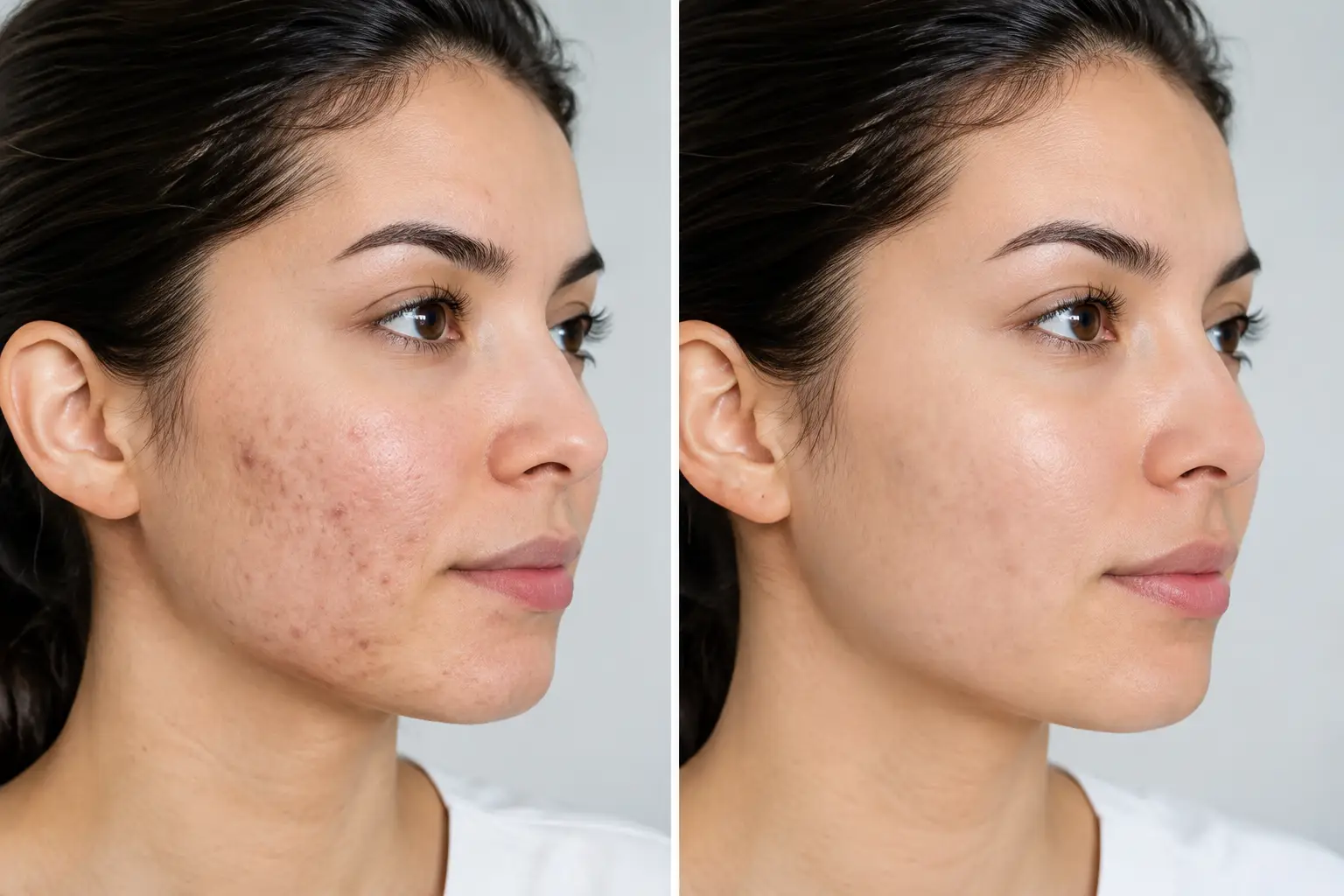
A clear change in acne scars rarely looks like a filtered, poreless complexion. The most meaningful acne scar treatment results examples show skin that appears smoother in natural light, makeup that sits more evenly, and shadows that are noticeably softened. For many people, that translates into something even more valuable: feeling less focused on concealing their skin every day.
Acne scarring is personal. Two people may both describe their concern as “acne scars,” yet have entirely different scar patterns, skin tones, sensitivities, and goals. That is why the right question is not simply, “What treatment works?” It is, “What result is realistic for my skin, and what treatment plan can help me get there safely?”
Acne Scar Treatment Results Examples by Scar Type
Before-and-after images can be helpful, but they only tell part of the story. The most reliable examples compare similar scar types and account for lighting, skin condition, and the number of treatments completed. Results are often gradual because collagen remodeling takes time.
Rolling scars: softer shadows and smoother contours
Rolling scars create a wavy or uneven texture across the cheeks, temples, or jawline. They tend to look more noticeable in side lighting because the skin is tethered beneath the surface. A positive result may look like a reduction in those shifting shadows and a smoother overall contour, rather than the complete disappearance of every indentation.
Treatments that stimulate collagen, such as microneedling and certain laser-based rejuvenation options, can help improve this type of texture over a series of sessions. If scar tethering is significant, a provider may recommend a more targeted approach before or alongside collagen-stimulating treatments. The best candidates are those who understand that improvement is progressive, not immediate.
Boxcar scars: refined edges and less visible depth
Boxcar scars are wider depressions with more defined edges. They can make skin texture appear irregular even when active acne is under control. In realistic treatment results, these scars may become shallower, their borders may appear less sharp, and the surrounding skin may look more even.
The right approach depends on how deep the scars are and where they are located. A personalized plan may include resurfacing, microneedling, carefully selected peels, or a combination of treatments. Deeper boxcar scars usually require more patience and may not respond as dramatically as superficial texture concerns, but improvement can still be meaningful.
Ice pick scars: a targeted, measured strategy
Ice pick scars are narrow and deep, often resembling tiny punctures in the skin. They can be the most challenging scars to treat with broad resurfacing alone. Results examples for ice pick scars should be viewed with particular care because a treatment that improves overall texture may not fully correct deep, pinpoint scars.
A consultation helps determine whether a more focused technique is appropriate. The goal may be to reduce the visibility of individual scars and improve how the skin reflects light, while treating broader texture concerns separately. This is where experienced assessment matters most: one treatment is not always the answer for every scar on the same face.
Post-acne marks: clearer tone, not necessarily scar correction
Red, pink, or brown marks left after acne are often mistaken for scars. These marks are changes in color, while true scars involve changes in skin texture. When discoloration is the main concern, clients may see a more even tone and less lingering redness with the right skin-rejuvenation plan and consistent sun protection.
This distinction is essential. A treatment chosen for pigmentation may not lift a depressed scar, and a texture-focused procedure may not be the fastest route to fading discoloration. Many clients have both concerns, which is why combination planning can be especially effective.
What Realistic Acne Scar Treatment Results Look Like Over Time
Immediately after a procedure, skin may look red, feel warm, or appear temporarily more textured as it heals. That early appearance is not the final result. With collagen-induction treatments, visible improvement often develops gradually over several weeks, with continued changes possible as the skin rebuilds support beneath the surface.
For a person with mild rolling scars, the first result may be a fresher, more refined look after one session, followed by more noticeable smoothing after a treatment series. Someone with deeper, mixed scarring may first notice improvement in overall texture, then more subtle changes in individual scars over subsequent months. Neither outcome should be judged against heavily edited images or another person’s healing timeline.
Most clients require multiple appointments for the best improvement. The exact number depends on scar depth, the treatment selected, the skin’s response, and whether active breakouts are still occurring. A thoughtful plan also leaves enough time between sessions for the skin to recover and produce new collagen.
The Details That Affect Your Outcome
Technology matters, but technique, skin preparation, and aftercare matter too. At Clara Medical Spa, acne scar treatment planning begins with an individualized assessment rather than a one-size-fits-all protocol. A physician-led perspective helps ensure that the treatment approach reflects your scar pattern, skin tone, medical history, and comfort with downtime.
Skin tone deserves special consideration. Some procedures can carry a higher risk of temporary or prolonged pigmentation changes, particularly when treatment settings are not selected carefully or when post-treatment sun exposure is not controlled. This does not mean deeper skin tones cannot be treated. It means treatment must be selected and performed with precision.
Active acne should also be addressed before aggressively treating scars. New breakouts can create new marks and scars, making it harder to measure progress. In some cases, the best first step is calming acne and strengthening the skin barrier, then beginning a scar-focused series once the skin is more stable.
Your home routine can support professional care. Gentle cleansing, hydration, daily broad-spectrum sunscreen, and avoiding picking at the skin all help protect your investment. Strong exfoliants and retinoids may need to be paused around certain procedures, but this should always be based on professional guidance rather than guesswork.
How to Evaluate Before-and-After Scar Results
When reviewing acne scar treatment results examples, look past the headline transformation. Check whether the photographs use similar angles, facial expressions, and lighting. Side lighting can exaggerate texture, while flat frontal lighting can minimize it. A trustworthy result does not rely on dramatically different makeup, camera distance, or filters.
Also consider the treatment timeline. A result after one session should be presented differently from a result after a full treatment plan. Ask what type of scars were treated, how many sessions were completed, and whether the person had additional treatments. This context helps you set expectations based on facts rather than hope alone.
Most importantly, define your own version of success. For some, it is wearing less foundation. For others, it is feeling comfortable in bright restaurant lighting, on video calls, or in close-up photographs. A natural-looking improvement that still looks like you is often the most satisfying outcome.
A Personalized Plan Is the Most Valuable First Step
Acne scars can be emotionally persistent long after breakouts have resolved, but they do not have to define how you feel about your skin. An in-person consultation can identify the scar types present, discuss appropriate treatment options, and give you a realistic sense of the changes that may be possible.
The goal is not perfection. It is healthier-looking skin, visible refinement, and a plan that respects both your features and your confidence. With the right guidance and patience, each treatment can be a thoughtful step toward skin that feels more comfortable to live in.