
Melasma is not simply a stubborn dark spot. It is a pigment condition that can respond beautifully to the right care, yet return when skin is exposed to sun, heat, visible light, or hormonal shifts. The best ways to treat melasma combine consistent prevention with a personalized treatment plan designed to brighten discoloration without irritating the skin and triggering more pigment.
Often appearing as symmetrical brown or gray-brown patches on the cheeks, forehead, upper lip, or chin, melasma can affect every skin tone. It is especially common during pregnancy, with certain hormonal medications, and in people with a family history of pigmentation. The goal is not a rushed fix. It is calmer, clearer-looking skin with a plan that protects your results long term.
Why melasma needs a personalized approach
Melasma is driven by overactive pigment-producing cells, but the triggers vary from person to person. For one client, daily sun exposure may be the primary factor. For another, hormones, inflammation from acne, a harsh skincare routine, or a previous procedure may be contributing.
This is why copying a friend’s routine or adding multiple brightening products at once can be disappointing. Over-exfoliation, burning, and visible irritation may worsen discoloration, particularly in deeper skin tones. A thoughtful assessment considers your skin tone, sensitivity, medical history, current products, lifestyle, and the depth and pattern of pigmentation before selecting treatment.
The best ways to treat melasma start with protection
No melasma treatment plan is complete without daily light protection. Even the most advanced treatments can struggle to maintain results if pigment is repeatedly stimulated by ultraviolet rays and visible light.
Use a broad-spectrum sunscreen with SPF 30 or higher every morning, including on cloudy days and when sitting near windows. For melasma-prone skin, a tinted mineral sunscreen with iron oxides is often especially helpful because it can help protect against visible light as well as UV exposure. Apply a generous amount to the face, and reapply when outdoors, sweating, or spending extended time in the car.
A wide-brimmed hat, sunglasses, and shade add meaningful protection. Heat can also aggravate melasma for some people, so consider practical ways to stay cool during outdoor activities. These habits may sound simple, but they are often the difference between temporary improvement and more stable results.
Medical-grade skincare for gradual brightening
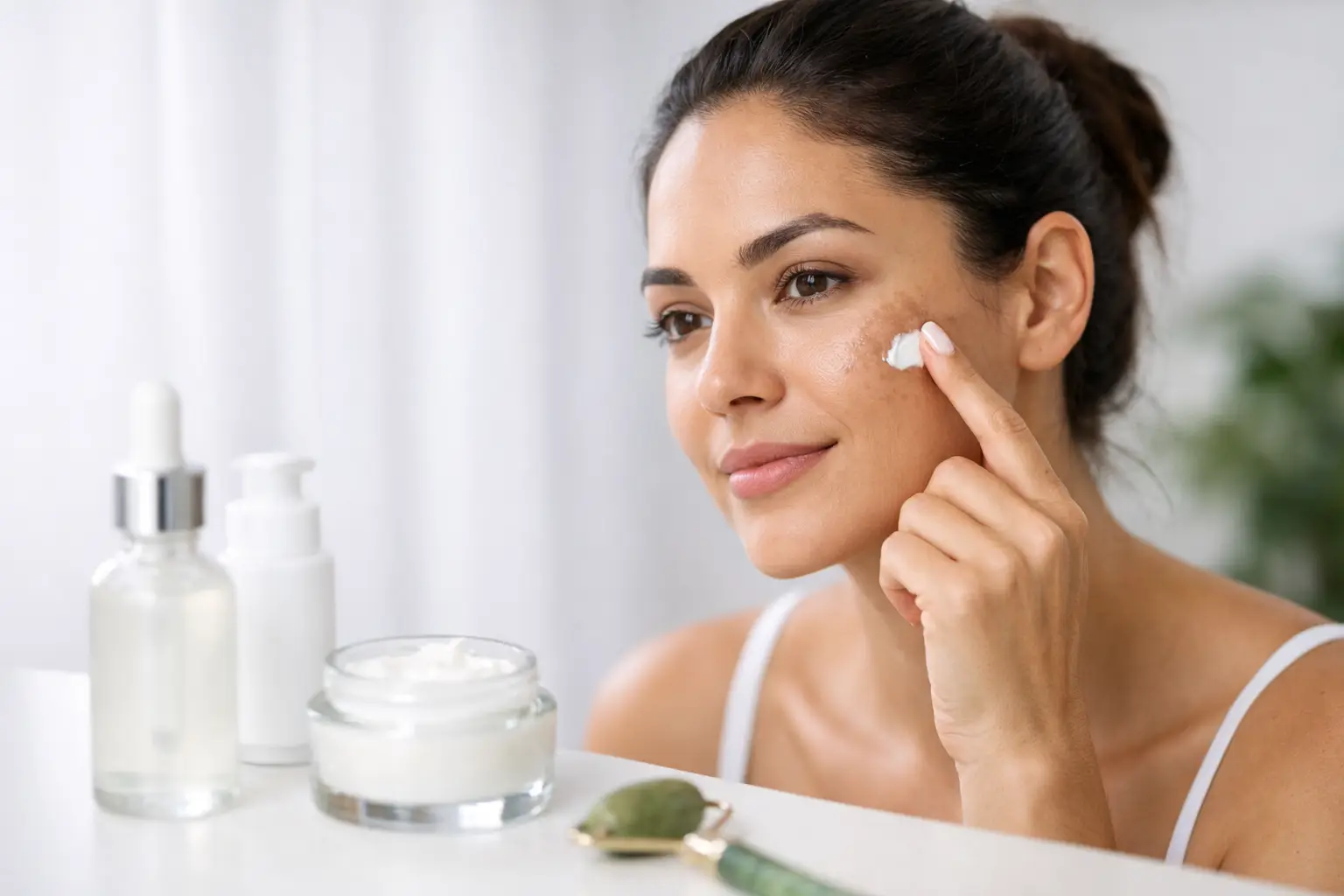
Topical care is usually the foundation of melasma treatment. The right ingredients can reduce the appearance of excess pigment, support healthy cell turnover, and improve overall tone. Results are gradual, typically building over several weeks to months, and consistency matters more than using the strongest possible product.
A provider may recommend prescription or medical-grade options such as hydroquinone, tretinoin or another retinoid, azelaic acid, kojic acid, vitamin C, tranexamic acid, cysteamine, or other pigment-regulating ingredients. Each works differently, and many plans use a carefully selected combination rather than a single product.
Hydroquinone can be effective for certain patients, but it should be used under professional guidance and often in planned treatment cycles. Retinoids can support cell turnover but may cause dryness or peeling when introduced too quickly. Azelaic acid may be a gentler option for sensitive or acne-prone skin. During pregnancy or breastfeeding, treatment choices change, so always discuss products with your medical provider.
A gentle cleanser, barrier-supporting moisturizer, and sunscreen may seem basic alongside brightening treatments, but they help the skin tolerate active ingredients. When the barrier is compromised, inflammation can make melasma look more pronounced.
What to avoid while treating pigmentation
Aggressive scrubs, frequent at-home peels, and strong acids layered without guidance can create irritation that leads to post-inflammatory hyperpigmentation. Fragrance or essential oils may also be problematic for reactive skin. If a product stings, causes persistent redness, or leaves your skin feeling tight and raw, more is not better.
Introduce one new active product at a time. This makes it easier to see what your skin tolerates and helps a provider adjust your plan with precision.
Professional treatments that may improve melasma
In-office treatments can enhance a strong skincare and sun-protection routine, but technique matters. Melasma is different from a single sunspot. Treatments that are too aggressive may initially look brighter, then lead to rebound pigmentation weeks later.
Chemical peels
Superficial chemical peels can help refine uneven tone, encourage gentle exfoliation, and support topical brightening products. A series of customized treatments is often preferred over one deep peel. The ideal peel strength and formula depend on your skin tone, sensitivity, current routine, and whether your melasma is active.
Aftercare is essential. Skin should be protected from sun and treated gently while it recovers. Peels are best viewed as part of a broader plan, not a standalone cure.
Microneedling and regenerative skin treatments
For selected candidates, conservative microneedling may support skin quality and enhance the delivery of certain topical treatments. However, any procedure that creates inflammation must be approached carefully in clients with melasma or a history of hyperpigmentation. The depth, timing, skincare preparation, and post-treatment care all influence safety.
A qualified provider will determine whether microneedling is appropriate for your current pigment pattern or whether it is better to stabilize melasma first with topical care.
Laser and light-based treatments
Laser treatment for melasma requires particular caution. Some laser and light devices can help reduce the look of pigment when used at carefully selected settings, while others may worsen melasma if the skin is overheated or treated too aggressively. There is no single “best laser” for every client.
A physician-led consultation is valuable because it helps distinguish melasma from freckles, sunspots, post-inflammatory pigmentation, or other causes of discoloration. These concerns may look similar but often require different treatment strategies. A conservative approach, a test area when appropriate, and a commitment to maintenance care can help protect the skin.
What results can you realistically expect?
Melasma can fade significantly, but it is usually a condition that needs ongoing management. Many clients notice a more even complexion after several weeks of consistent home care, while professional treatments may further improve brightness and texture over a series of appointments. The timeline depends on the depth of pigment, your triggers, skin sensitivity, and how consistently you protect your skin from light.
It also helps to set a realistic goal: better control, softer contrast, and a more luminous, even-looking complexion rather than a promise that pigment will never return. Seasonal changes, vacations, hormonal shifts, and lapses in sunscreen use can all influence recurrence.
When to seek professional guidance
Schedule an evaluation if a dark patch is new, changing, raised, itchy, bleeding, or unlike your usual pigmentation. A clinical assessment is also wise if over-the-counter products have not helped after a consistent trial, if your skin becomes irritated, or if you are considering a peel or laser treatment.
At Clara Medical Spa, personalized skin consultations focus on your skin’s individual behavior, not a one-size-fits-all solution. With the right combination of physician-guided care, appropriate treatments, and daily protection, melasma can become far less visible and far less disruptive to how confident you feel in your skin.
The most effective next step is often a simple one: begin protecting your skin every day, then choose professional care that respects its sensitivity and supports beautiful, natural-looking improvement over time.