
Joseph Ahmadi
Medically reviewed by Dr. Mo Maghaddasi, Medical Director at Clara Med Spa.
Last updated: August 11, 2026
Spider veins often seem minor until they start catching your eye every time you get dressed, apply makeup, or look in the mirror. If you have been considering a vascular laser for spider veins, the real question is not just whether it works, but whether it is the right treatment for your skin, your vein pattern, and your goals.
What a vascular laser for spider veins actually does
Spider veins are small, visible blood vessels that sit close to the surface of the skin. They can appear red, blue, or purple and often show up around the nose, cheeks, chin, and legs. While they are usually harmless, they can create a persistent flushed look or a web-like pattern that feels difficult to conceal.
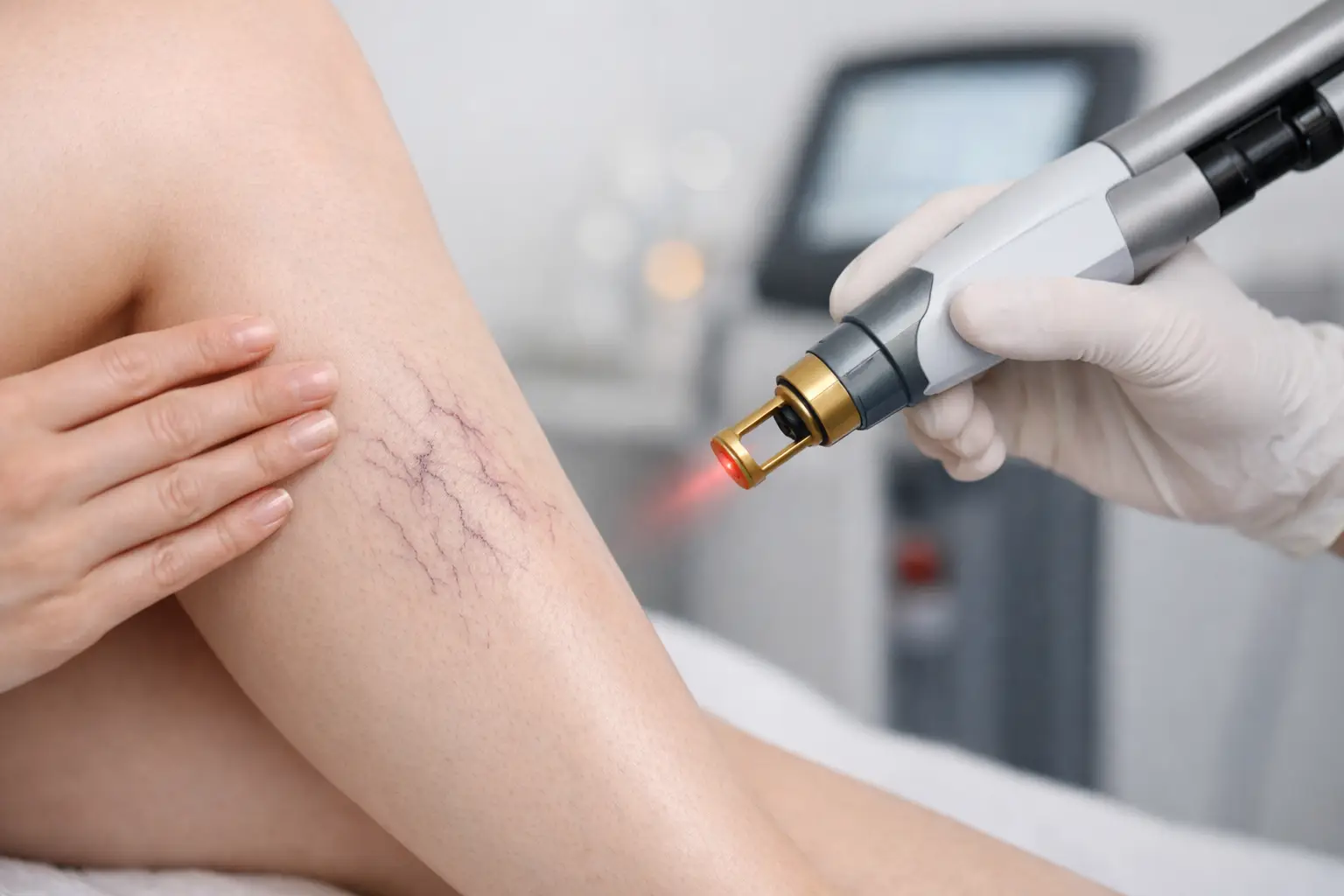
A vascular laser is designed to target the pigment within those visible vessels. The energy heats the unwanted vein in a controlled way, causing it to collapse and gradually be reabsorbed by the body. The goal is selective treatment. Healthy surrounding skin is preserved while the visible vessel fades over time.
This is one reason laser treatment appeals to patients who want visible improvement without surgery or lengthy recovery. It is precise, efficient, and well suited to many superficial vessels, especially on the face.
Why laser is often chosen over waiting it out
Spider veins rarely disappear on their own. In some cases, they become more noticeable with age, sun exposure, genetics, hormonal changes, or repeated flushing. Covering them with makeup can help temporarily, but that does not address the vessel itself.
A vascular laser offers a more direct solution. For facial veins in particular, it can be an elegant option because it treats the source of the redness rather than simply masking it. Patients often appreciate that sessions are relatively quick and that improvement can be gradual but meaningful.
That said, not every spider vein is best treated with laser. Very fine facial vessels often respond beautifully, while larger leg veins may require a different approach such as sclerotherapy. This is where an expert assessment matters. Good treatment is not about forcing one technology to do everything. It is about choosing the right tool for the right concern.
Where vascular laser works best
The most common treatment areas include the sides of the nose, cheeks, chin, and other parts of the face where broken capillaries or diffuse redness are visible. These areas tend to respond well because the vessels are superficial and easier to target precisely.
On the legs, results can vary more depending on the size, depth, and color of the veins. Some smaller superficial leg veins may improve with vascular laser, but larger or feeder veins are often better addressed through other medical treatments. Patients sometimes assume all visible veins fall into the same category. In practice, they do not.
That distinction is important because expectations should match the anatomy. A personalized consultation can determine whether laser is likely to give the kind of clearance you want or whether another treatment plan would be more effective.
What treatment feels like
Most patients describe the sensation as a quick snap against the skin, similar to a rubber band. The level of discomfort depends on the treatment area, the density of the vessels, and individual sensitivity. Facial treatments are usually very tolerable and brief.
Some vascular laser systems include cooling features that help protect the skin and improve comfort. After treatment, it is common to see temporary redness, mild swelling, or slight darkening of the treated vessels before they fade. For many people, these effects settle within a few days.
This is not usually a treatment that forces you to disappear from your schedule for a week. Still, it is wise to plan around important social events if the area being treated is prominent, especially on the face.
How many sessions you may need
One of the biggest misconceptions is that spider veins always clear in a single visit. Some vessels do respond quickly, but many patients need a series of treatments for the best cosmetic result. The number depends on how many veins are present, how stubborn they are, where they are located, and how your body clears the treated vessel.
Facial veins may show visible improvement after one to three sessions. More diffuse redness or a larger network of vessels can require additional visits. Leg veins can be even more variable.
There is also a difference between improvement and perfection. Experienced providers discuss both. The goal is clearer, more even-looking skin, but there are cases where a small amount of residual redness remains or maintenance treatments are needed over time.
Who is a good candidate for vascular laser for spider veins
The best candidates are generally healthy adults with visible superficial vessels who want a non-surgical treatment and realistic improvement. People with broken capillaries around the nose, persistent redness on the cheeks, or isolated spider veins on the face often do especially well.
Your skin tone, medical history, medications, and tendency toward pigmentation all matter. Laser settings must be selected carefully, particularly in darker skin tones, where safety and precision become even more important. A physician-led or medically supervised clinic adds value here because treatment should be tailored, not standardized.
It is also important to mention that not all redness is caused by simple spider veins. Rosacea, inflammation, sun damage, and other skin conditions can overlap. If the diagnosis is off, the treatment plan will be too. That is why a proper consultation should come before any procedure.
What to avoid before and after treatment
Preparation is usually straightforward, but it matters. Recent sun exposure, self-tanner, and certain skincare products may increase sensitivity or affect how the skin responds. Your provider may advise pausing active ingredients before treatment and avoiding direct sun before and after your session.
After treatment, sun protection is essential. Heat, strenuous exercise, hot baths, and anything that intensifies flushing may also need to be limited briefly, especially after facial vascular laser. These instructions are not just routine aftercare. They help reduce irritation and support better healing.
If you are treating leg veins, your provider may also discuss circulation habits, standing patterns, or other factors that affect recurrence. Laser can treat visible veins, but it cannot stop your genetics or lifestyle from influencing future ones.
Results, maintenance, and the role of expertise
A good result is not only about the machine. It is about the person evaluating the vessels, choosing the settings, spacing the sessions, and knowing when laser is appropriate and when it is not. In aesthetics, subtle judgment often makes the difference between a nice outcome and a frustrating one.
Results usually develop over several weeks as the body clears the treated vessels. Some veins fade dramatically, others lighten more modestly, and some need retreatment. Maintenance can also be part of the conversation, especially if you are prone to redness, sun damage, or recurring facial capillaries.
At Clara Medical Spa, this kind of treatment is approached with the balance patients want most: visible improvement paired with comfort, safety, and natural-looking skin. For many people, the appeal is simple. You still look like yourself, just with less redness and fewer visible vessels competing for attention.
Is vascular laser worth it?
If spider veins are making your skin look uneven, flushed, or older than you feel, vascular laser can be a very worthwhile treatment. It is especially compelling when you want a polished result without surgery and when the vessels are small, superficial, and well suited to laser technology.
The key is not assuming every visible vein should be treated the same way. The best outcomes come from matching the treatment to the vessel and the patient to the plan. That is what turns a cosmetic procedure into a thoughtful investment in your appearance.
Clearer skin often changes more than a reflection. It can make going makeup-free feel easier, getting close to the mirror less frustrating, and daily confidence feel a little more effortless.