
Joseph Ahmadi

Medically reviewed by Dr. Mo Maghaddasi, Medical Director at Clara Med Spa.
Last updated: August 11, 2026
A patient sits down for a wrinkle consultation and asks a very fair question: if all of these injectables relax facial muscles, what’s the difference between Botox, Dysport, Xeomin, and Letybo? The short answer is that they all belong to the same family of wrinkle relaxers, but they are not interchangeable in every situation. Small differences in formulation, diffusion, onset, and dosing can affect which option feels like the best fit for your face, your goals, and your treatment history.
For most people, the decision is not about which product is universally “best.” It is about which product is best for a specific area, a specific muscle pattern, and a specific aesthetic plan. That is why experienced assessment matters just as much as the brand in the syringe.
What’s the difference between Botox, Dysport, Xeomin, and Letybo?
Botox, Dysport, Xeomin, and Letybo are all botulinum toxin type A injectables used to soften dynamic wrinkles. These are the lines created by repeated facial movement, such as frowning, squinting, or raising the brows. Common treatment areas include forehead lines, frown lines between the brows, and crow’s feet.
The biggest distinction is not their purpose. It is how each product is manufactured and how it behaves after injection. They all work by temporarily reducing muscle activity, but they differ in protein structure, unit measurement, diffusion characteristics, and how quickly results may appear.
That means two products can both treat frown lines beautifully, yet one may kick in a little faster, one may spread a little more broadly, and one may be preferred in a patient who wants a “naked” formula without accessory proteins. Those details matter when the goal is natural-looking refinement rather than a frozen result.
The similarities matter more than most people think
Before getting lost in brand comparisons, it helps to understand what these injectables have in common. All four are prescription neuromodulators. All are designed to relax targeted muscles. All are temporary. And all depend heavily on injector technique, placement, dose, and patient anatomy.
This is why online debates can be misleading. A great Botox result and a great Dysport result can look equally elegant. A disappointing result with any product may have less to do with the brand and more to do with dosing, dilution, anatomy, or expectations. The product matters, but the treatment plan matters more.
Botox: the familiar standard
Botox is the name most patients recognize first, and for good reason. It has been used for years in aesthetic medicine and remains the benchmark many people compare everything else against. It is often chosen for its strong track record, predictable performance, and broad familiarity among both providers and patients.
In practice, Botox is known for precision. Many injectors like it for areas where controlled placement matters, especially when shaping the upper face. Results often begin to show in a few days, with full effect developing over about 10 to 14 days. For many patients, the results last around three to four months, though this varies.
Its biggest advantage may be consistency. Patients who have been treated successfully with Botox in the past often prefer to stay with what works. That said, brand loyalty is not always necessary if another neuromodulator better suits the treatment area or treatment goal.
Dysport: often known for quicker onset and broader spread
Dysport is another well-established option and is especially popular for treating larger areas, such as the forehead. Many providers find that it diffuses a bit more than Botox, which can be an advantage when treating broader muscle groups. In the right hands, that can create a very smooth, balanced look.
Some patients notice Dysport working a little faster than Botox, sometimes within two to three days. That can be appealing before an event or for patients who simply prefer a quicker visible change. Its duration is often similar to Botox, though individual metabolism and muscle strength can shift the timeline.
One point that causes confusion is dosing. Dysport units are not equivalent to Botox units, so a higher number on paper does not mean you are getting “more” product in a meaningful way. Unit systems are brand-specific. Comparing prices or plans by unit alone rarely tells the full story.
Xeomin: a purified formula with no accessory proteins
Xeomin is often called the “naked” neuromodulator because it contains botulinum toxin type A without the accessory proteins found in some other formulas. For certain patients, that cleaner composition is the main reason they are interested in it.
From a cosmetic results standpoint, Xeomin can perform very similarly to Botox. Onset and longevity are usually in the same general range, with full results appearing over about two weeks and duration often lasting around three to four months. Its appeal is less about dramatic visual difference and more about formulation preference.
Some patients who have used neuromodulators for many years ask whether Xeomin may help if they feel another product is becoming less effective. That is a conversation worth having with an experienced provider, but it is not a guaranteed fix. True resistance is uncommon, and many cases of reduced response are actually related to dose, interval timing, or changes in muscle activity over time.
Letybo: a newer option gaining attention
Letybo is a newer botulinum toxin type A injectable in the aesthetic market, and many patients are hearing about it for the first time. Like the others, it is used to soften expression lines by temporarily relaxing targeted muscles. As with any newer product, interest tends to be high because patients want to know whether it offers a meaningful advantage.
In general, Letybo is considered comparable to other neuromodulators in its intended effect. Some providers and patients report a smooth, natural result and a reliable onset similar to other products in this category. The finer points, including how it feels in different treatment zones and which patients seem to prefer it, are still being shaped by broader real-world use.
That does not make it experimental in the everyday sense, but it does mean provider familiarity matters. A newer brand can be excellent, but product performance is best judged in the context of an injector who understands how to dose and place it properly.
Which one lasts longer?
For most patients, the difference in longevity is smaller than marketing can make it sound. Botox, Dysport, Xeomin, and Letybo generally last in the range of three to four months for cosmetic treatment, although some people metabolize them faster and some hold results longer.
Men with stronger facial muscles may need different dosing than women. First-time patients may respond differently from those on a maintenance schedule. Treatment area also matters. Crow’s feet can behave differently than the glabella, and the forehead always requires balance and restraint.
If your priority is longevity, the better question is often not which brand lasts longest in theory, but which one gives you the most refined and stable result on your face.
Which one looks the most natural?
Natural results come from planning, not from a logo. Any of these neuromodulators can look soft, polished, and refreshed when the dose is tailored correctly. Any of them can also look heavy or overdone if the approach is too aggressive.
A natural outcome depends on preserving expression while reducing the lines that make the face look tense, tired, or etched. That takes judgment. It also takes restraint. The best treatment should leave people noticing that you look well-rested and confident, not wondering what changed.
How providers choose the right product
A skilled injector is not simply choosing a brand. They are evaluating your muscle strength, facial symmetry, movement patterns, previous treatment response, and aesthetic goals. Someone bothered mainly by a strong frown line may be an excellent candidate for one option, while someone seeking soft forehead refinement with preserved brow movement may benefit from another.
This is also where your medical history and preferences come in. If you have had great results with one neuromodulator, there may be no reason to switch. If you are new to treatment, your provider may recommend the product they believe gives the best control for your anatomy. At Clara Medical Spa, this kind of personalized planning is what supports results that look elevated, not obvious.
What should you ask at your consultation?
The best consultation is less about brand names and more about fit. Ask which product your provider recommends for your goals and why. Ask how quickly you can expect to see results, how long they typically last for someone with your muscle activity, and whether the treatment plan is designed to keep movement looking natural.
You can also ask whether your area of concern requires precision or broader diffusion, whether you are a good candidate for baby Botox-style dosing, and what maintenance may look like over time. Those questions usually lead to a better outcome than simply asking for the most popular brand.
Choosing between Botox, Dysport, Xeomin, and Letybo should feel reassuring, not complicated. The right answer is rarely one-size-fits-all. It is the product, dose, and technique that align with your face and the version of you that still looks like you – just smoother, softer, and more refreshed.
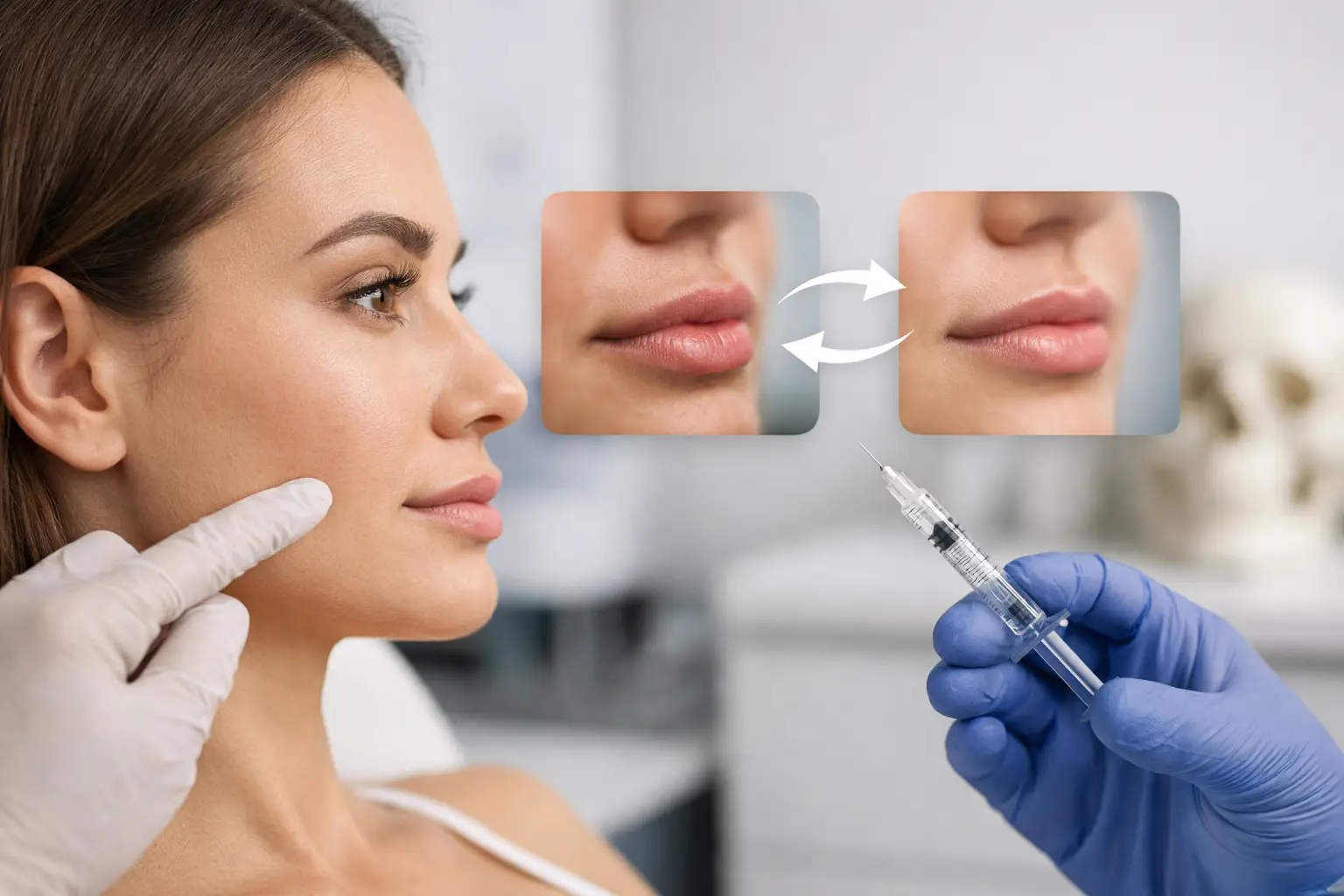

[…] lip flip uses a small amount of a neuromodulator, such as Botox, placed strategically around the upper lip. Rather than adding volume, it gently relaxes the muscle […]
[…] What’s the Difference Between Botox, Dysport, Xeomin, and Letybo? […]