
Joseph Ahmadi
Medically reviewed by Dr. Mo Maghaddasi, Medical Director at Clara Med Spa.
Last updated: August 11, 2026
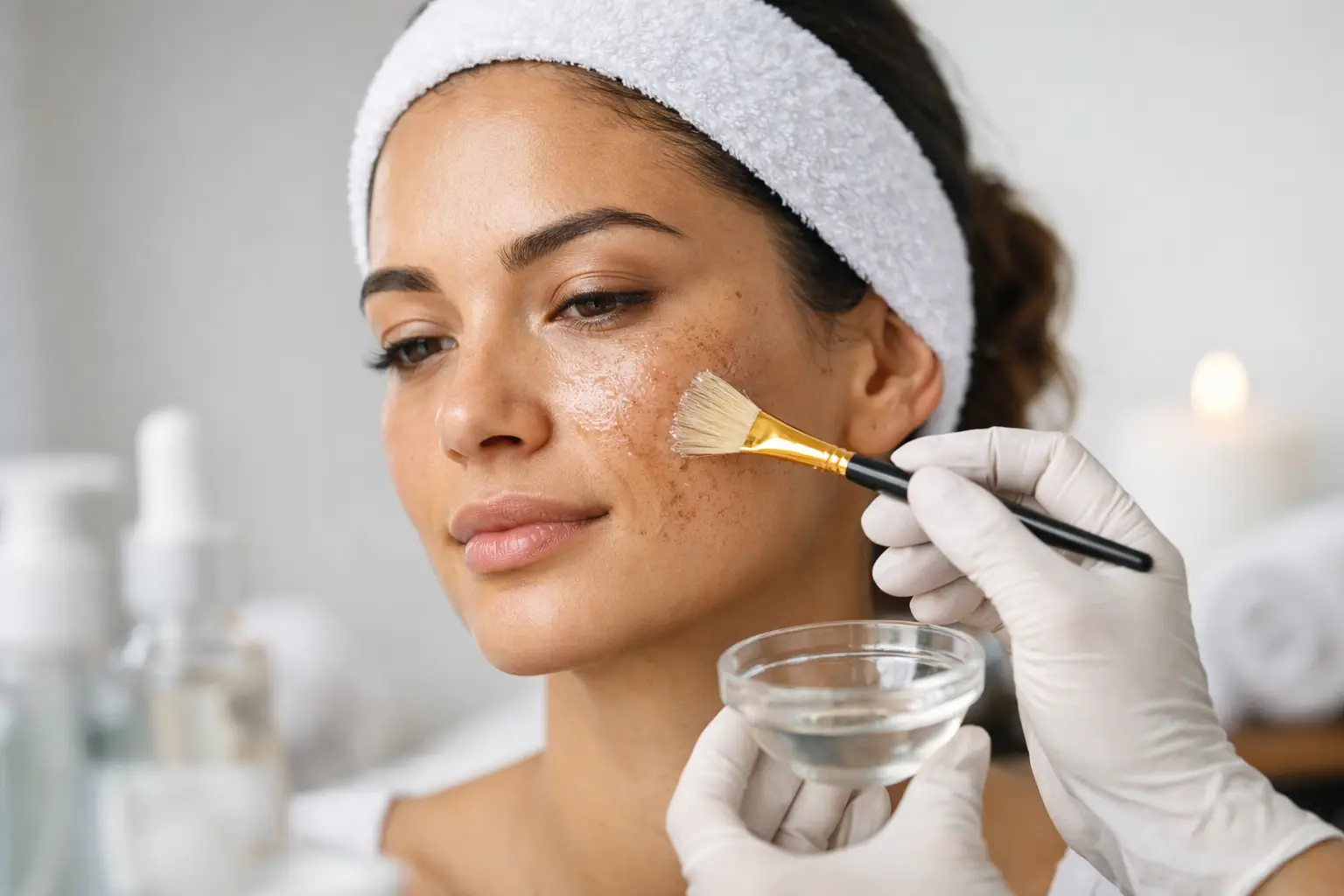
If your makeup sits unevenly, sun spots seem to linger no matter what you use at home, or your skin looks dull in certain lighting and blotchy in others, you are not imagining it. A chemical peel for uneven skin tone is often one of the most effective ways to improve visible discoloration, refresh the skin’s surface, and create a clearer, more balanced complexion without surgery.
At Clara Medical Spa in Thornhill, our facials and chemical peels serve clients from Thornhill, Vaughan, Richmond Hill, and across the GTA, including chemical peels for uneven skin tone.
Uneven skin tone can show up in different ways. For some, it is scattered brown spots after years of sun exposure. For others, it is post-acne marks, patchy redness, or areas of discoloration that make the skin look tired even when it is healthy. The right peel can help, but the best results come from choosing the right depth, the right formula, and the right treatment plan for your skin rather than assuming every peel works the same way.
How a chemical peel for uneven skin tone works
A chemical peel uses a controlled exfoliating solution to remove damaged outer layers of skin and encourage healthier skin cell turnover. As older, pigmented, or rough surface cells shed, fresher skin is revealed underneath. Over time, this process can soften the appearance of discoloration and improve overall clarity.
That sounds simple, but the treatment is more nuanced than many people expect. Uneven tone is not one single condition. It may be caused by sun damage, melasma, acne, inflammation, hormones, or natural aging. A peel can improve many of these concerns, but the formula and strength matter because the skin needs enough stimulation to create change without causing unnecessary irritation.
In a medical aesthetics setting, the goal is not to make skin peel dramatically for the sake of it. The goal is visible improvement with a thoughtful approach to safety, comfort, and natural-looking results.
What causes uneven skin tone in the first place?
Most uneven skin tone comes back to excess pigment production or lingering inflammation. Sun exposure is a major factor because UV damage triggers melanin production, often leading to freckles, sun spots, and patches of discoloration that become more noticeable over time. Hormonal fluctuations can also contribute, especially in people prone to melasma.
Acne is another common cause. Even after blemishes heal, they can leave behind red, brown, or gray marks that stay for weeks or months. Skin texture often plays a role as well. When the surface is rough or congested, light does not reflect evenly, so the complexion can look less smooth and radiant.
This is why a peel can be so useful. It addresses both surface buildup and the visible aftermath of pigment irregularity, helping the skin look brighter and more refined.
Not every peel is the same
When patients ask for a chemical peel for uneven skin tone, they are often thinking of one treatment. In reality, peels range from light to medium depth, and each one has a different purpose.
Light peels are often ideal for early discoloration, mild dullness, and maintenance. They usually involve little downtime and can be done in a series. These are a strong option for busy patients who want gradual improvement and a fresher appearance without interrupting their schedule.
Medium-depth peels work more aggressively and may be recommended for more visible pigment concerns, rough texture, or longer-standing sun damage. These treatments can produce stronger results, but they also involve more recovery and need closer professional guidance.
The strongest peel is not always the best peel. If your skin is sensitive, reactive, or prone to post-inflammatory hyperpigmentation, a gentler series may give you a better outcome than one aggressive session.
Ingredients commonly used in peels
Different peeling agents target different concerns. Glycolic acid is often chosen for dullness, mild pigmentation, and rough texture. Salicylic acid can be especially helpful for oily or acne-prone skin because it also works inside the pores. Lactic acid is generally gentler and can suit patients who want brightening with less irritation.
Other formulations may include trichloroacetic acid, mandelic acid, or blended solutions designed to improve tone while supporting skin tolerance. The best choice depends on your skin type, goals, and how your skin responds to exfoliation.
Who is a good candidate?
Many adults with blotchy skin, post-acne marks, sun spots, or mild melasma may benefit from a peel, especially when they want visible skin correction without a surgical procedure. It can be an excellent option for patients who feel their skin looks uneven or tired even though they take good care of it.
That said, not everyone is a candidate for every kind of peel. If you have very sensitive skin, active eczema, recent sunburn, certain infections, or are using strong retinoids without a proper treatment pause, your provider may recommend waiting or adjusting the plan. Deeper peels also need extra caution in darker skin tones because the wrong approach can worsen pigmentation instead of improving it.
This is where physician-led assessment matters. Skin tone, skin history, lifestyle, and the exact type of discoloration all influence the safest and most effective treatment path.
What results should you realistically expect?
A peel can make a meaningful difference in brightness, smoothness, and clarity, but realistic expectations are essential. Some patients notice a fresher glow after one treatment. More stubborn pigmentation usually improves gradually over a series of sessions.
If your uneven tone is mostly surface-level sun damage or post-breakout marks, you may see noticeable changes relatively quickly. If hormones are driving the discoloration, especially with melasma, treatment often requires more patience and ongoing maintenance. In those cases, a peel can still help, but it is usually part of a broader plan rather than a one-time fix.
The best result is skin that looks healthier, more even, and naturally refreshed. It should not look overtreated. At Clara Medical Spa, that balance between science and artistry is what makes skin rejuvenation feel elevated rather than aggressive.
What happens after treatment?
Downtime depends on the peel. Some treatments leave the skin slightly pink and dry for a day or two. Others can cause visible flaking or peeling for several days. During recovery, the skin may feel tight, look bronzed, or shed in patches as damaged cells lift away.
This stage can be tempting to interfere with, but restraint matters. Picking, scrubbing, or using active products too soon can irritate the skin and interfere with healing. Gentle cleansing, hydration, and strict sun protection are part of the treatment, not an afterthought.
Sun exposure is especially important. Freshly treated skin is more vulnerable, and unprotected UV exposure can trigger new pigmentation. A successful peel is not only about what happens in the treatment room. It also depends on how carefully the skin is protected afterward.
Chemical peel for uneven skin tone versus other treatments
A peel is not the only way to correct discoloration, and sometimes it is not the best standalone option. Microneedling, laser treatments, medical-grade facials, and customized skincare can all play a role depending on what is causing the unevenness.
For example, if pigmentation is paired with acne scarring or textural irregularity, combining treatments may produce a better result than relying on a peel alone. If redness or vascular concerns are the main issue, a light-based treatment may be more appropriate. And if your skin barrier is compromised, beginning with restorative skincare before any peel may lead to a safer and more comfortable outcome.
This is why personalized planning matters more than trend-driven treatment choices. The most elegant results usually come from selecting the right intervention for the real cause of the concern.
How to prepare for the best outcome
Preparation starts with honesty about your skin history. Recent tanning, previous reactions, current skincare products, and any history of pigmentation issues should all be discussed before treatment. Small details can change the plan.
You may be advised to pause certain exfoliants or retinoids before your appointment. In some cases, patients with pigment-prone skin are placed on a prep routine first to reduce the risk of irritation and support a more even result. This step may seem conservative, but it often improves both safety and final outcome.
Choosing an experienced provider is just as important as choosing the treatment itself. A peel should never be treated like a one-size-fits-all facial add-on. When performed thoughtfully, it can be a precise, highly effective tool for restoring brightness and smoothness to the complexion.
If uneven tone has been making your skin look older, duller, or less polished than you feel, a well-chosen peel can be a smart next step. The most rewarding results tend to come from a treatment plan built around your skin, your goals, and a standard of care that values both visible improvement and long-term skin health.
Explore our facials and peels in Thornhill and see the price list.
Frequently Asked Questions
Where can I get a facial or chemical peel in Thornhill?
Clara Medical Spa is located at 1 Promenade Cir in Thornhill, inside the Promenade Shopping Centre, and treats clients from Thornhill, Vaughan, Richmond Hill, and the greater Toronto area.
How much do facials and peels cost at Clara Medical Spa?
Chemical peel facials are $90, anti-aging and brightening facials are $120, and Hydra Facials are $150 on our price list.
Can a chemical peel even out skin tone?
Peels can help improve the look of uneven tone and mild pigmentation over a series.
How many peels do I need?
This depends on your skin and goals. Your provider will plan a series.
Related treatments & reading
[…] Chemical Peel for Uneven Skin Tone […]
[…] special attention. Recently treated skin is more sensitive, and tanning can increase the risk of uneven pigmentation. Keep the area covered when practical and use broad-spectrum sunscreen once the skin has healed […]
[…] may deliver a more refined result than one aggressive peel, especially when preserving an even skin tone is a […]
[…] Chemical Peel for Uneven Skin Tone […]