
Joseph Ahmadi
Medically reviewed by Dr. Mo Maghaddasi, Medical Director at Clara Med Spa.
Last updated: August 11, 2026
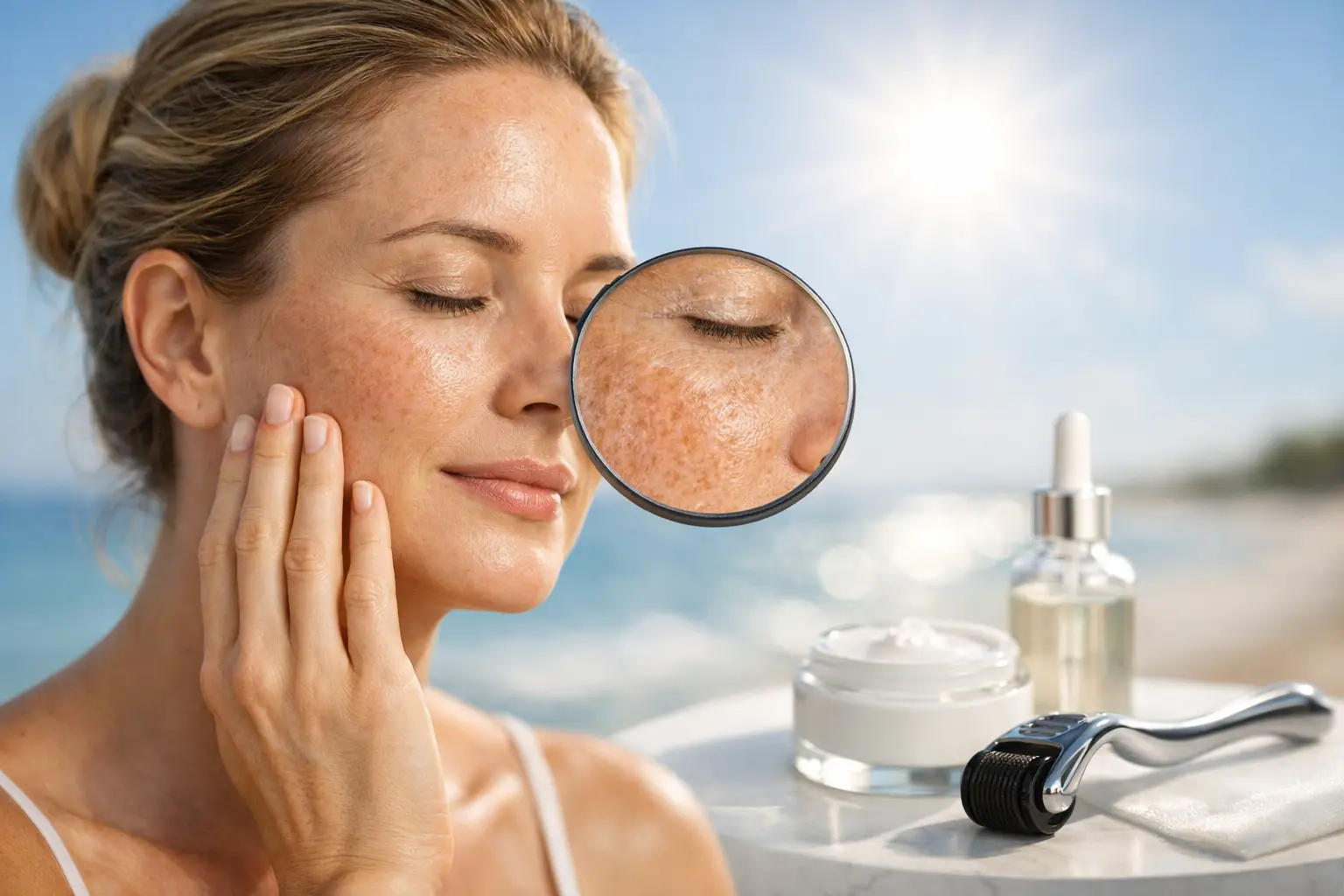
A few extra summers in the sun can show up long after the tan is gone. What starts as a handful of freckles or uneven tone can gradually turn into persistent brown spots, redness, rough texture, and skin that looks older than it feels. The good news is that modern sun damage treatment for face concerns can do far more than cover the problem. With the right plan, skin can look clearer, smoother, brighter, and more refined.
Sun damage is not one single issue, which is why treatment should never be one-size-fits-all. Some people are mainly bothered by pigmentation. Others notice fine lines, broken capillaries, or a dull, leathery texture. The most effective approach depends on what the sun has changed in your skin and how much correction you want.
What sun damage really looks like on the face
Most patients think of sun damage as dark spots, but that is only part of the picture. UV exposure can trigger excess pigment, break down collagen, weaken skin elasticity, and leave behind a blotchy or uneven appearance. Over time, the face may develop sun spots, redness around the nose and cheeks, crepey texture, enlarged pores, and fine lines that look more pronounced than expected for your age.
There is also a difference between surface-level discoloration and deeper structural change. A brightening facial may help skin look refreshed, but it will not erase established pigmentation or rebuild lost collagen. That is where professional treatment makes a visible difference.
Choosing the right sun damage treatment for face concerns
The best treatment is based on the type of damage, your skin tone, your lifestyle, and how quickly you want to see improvement. In many cases, the strongest results come from combining treatments rather than relying on just one.
Brown spot laser for visible pigmentation
When sun damage shows up as flat brown spots or clusters of discoloration, targeted laser treatment is often one of the most effective options. Brown spot laser treatments are designed to break up excess pigment so the body can gradually clear it away. This can be especially helpful for cheeks, forehead, temples, and other areas that receive the most sun exposure.
Patients often like this option because it is precise. Instead of treating the entire face aggressively, it focuses on areas where pigmentation is most noticeable. That said, not every brown mark is safe to treat without proper assessment. Pigmented lesions should always be evaluated by an experienced medical provider before treatment begins.
Chemical peels for tone and texture
Peels can improve mild sun damage by exfoliating damaged surface cells and encouraging healthy turnover. They are especially useful when the skin looks dull, uneven, or rough, and they can soften the appearance of superficial pigmentation over time.
This option appeals to patients who want a refreshed look with less intensity than some laser procedures. Results can be beautiful, but peels tend to work best in a series and may be more limited for deeper sun spots or more advanced photoaging.
Microneedling for texture and early aging
If sun exposure has left your skin rough, tired, or etched with fine lines, microneedling may be part of the answer. Rather than targeting pigment directly, microneedling supports collagen remodeling. This can improve texture, smoothness, and overall skin quality, which makes sun-damaged skin look healthier and more youthful.
For patients with both discoloration and textural change, microneedling is often paired with other treatments as part of a broader rejuvenation plan. It is not usually the first choice for isolated brown spots, but it can be an excellent choice when the skin needs repair beyond surface color correction.
Medical-grade facials and maintenance care
Not all sun damage needs an aggressive reset. Some patients are early in the process and mainly need consistent maintenance. Professional facials, gentle resurfacing, and customized skincare can help keep mild discoloration from becoming more pronounced while supporting brighter, more balanced skin.
This is also a smart option for patients who are not ready for laser treatment or who want to maintain results after corrective procedures.
What to expect from professional treatment
A well-planned consultation matters as much as the treatment itself. Sun damage can look similar across patients, but the skin underneath may behave very differently. That is why careful assessment is so important, especially for patients with melasma, sensitive skin, or deeper skin tones that may be more prone to post-inflammatory pigmentation.
A provider should look at more than the spots you want gone. They should assess your skin tone, vascularity, texture, laxity, and treatment history, then recommend a plan that fits your comfort level and goals. In a physician-led setting, safety and aesthetics work together. The goal is not just to remove signs of damage, but to restore a natural, healthy-looking finish.
Some treatments create visible improvement quickly, while others build results more gradually. Brown spot laser may produce a noticeable change in targeted pigmentation after a short healing period. Collagen-based treatments like microneedling usually take more patience but improve the quality of the skin over time. If you are looking for polished, natural-looking results, the right timeline is usually the one that respects your skin rather than rushes it.
Why at-home products have limits
Good skincare matters, but there is a point where serums and brightening creams stop being enough. Topical products can help prevent further damage and may improve mild unevenness, but they usually cannot remove established sun spots or reverse deeper collagen loss on their own.
This is where many patients get frustrated. They spend months trying product after product, only to find that the same areas keep showing through. Professional treatments work differently because they reach beyond the surface and address the actual pigment buildup or structural changes in the skin.
That does not mean home care is unnecessary. It means home care works best as support, not as a substitute for in-clinic correction when sun damage is more advanced.
Protecting your results after sun damage treatment for face issues
Treating sun damage without daily protection is like repainting a wall while leaving the window open in a storm. If you invest in corrective treatment, protecting your results becomes part of the process.
Daily SPF is essential, even in cooler months and even when you are mostly indoors. Sun exposure through car windows and incidental daily exposure can be enough to trigger pigment again. A wide-brim hat, sunglasses, and consistent reapplication matter more than most people realize.
Your provider may also recommend pigment-regulating skincare, antioxidants, or retinoids depending on your skin type and treatment plan. The point is not to overload your routine. It is to keep your skin stable, supported, and less likely to slide backward.
When it is time to seek expert help
If your skin tone looks uneven no matter what you use, if brown spots are getting darker, or if your face looks older and rougher than it should, it is worth having it assessed properly. Many patients wait longer than they need to because they assume sun damage is simply something to live with. It is not.
A personalized treatment plan can make a meaningful difference in how your skin looks and how confidently you feel in it. At Clara Medical Spa, that process is guided by clinical experience, aesthetic judgment, and a focus on results that look refined rather than overdone.
Healthy skin does not need to look filtered or flawless to be beautiful. It just needs the right care, at the right time, from professionals who understand how to treat damage without losing the natural character of your face.