
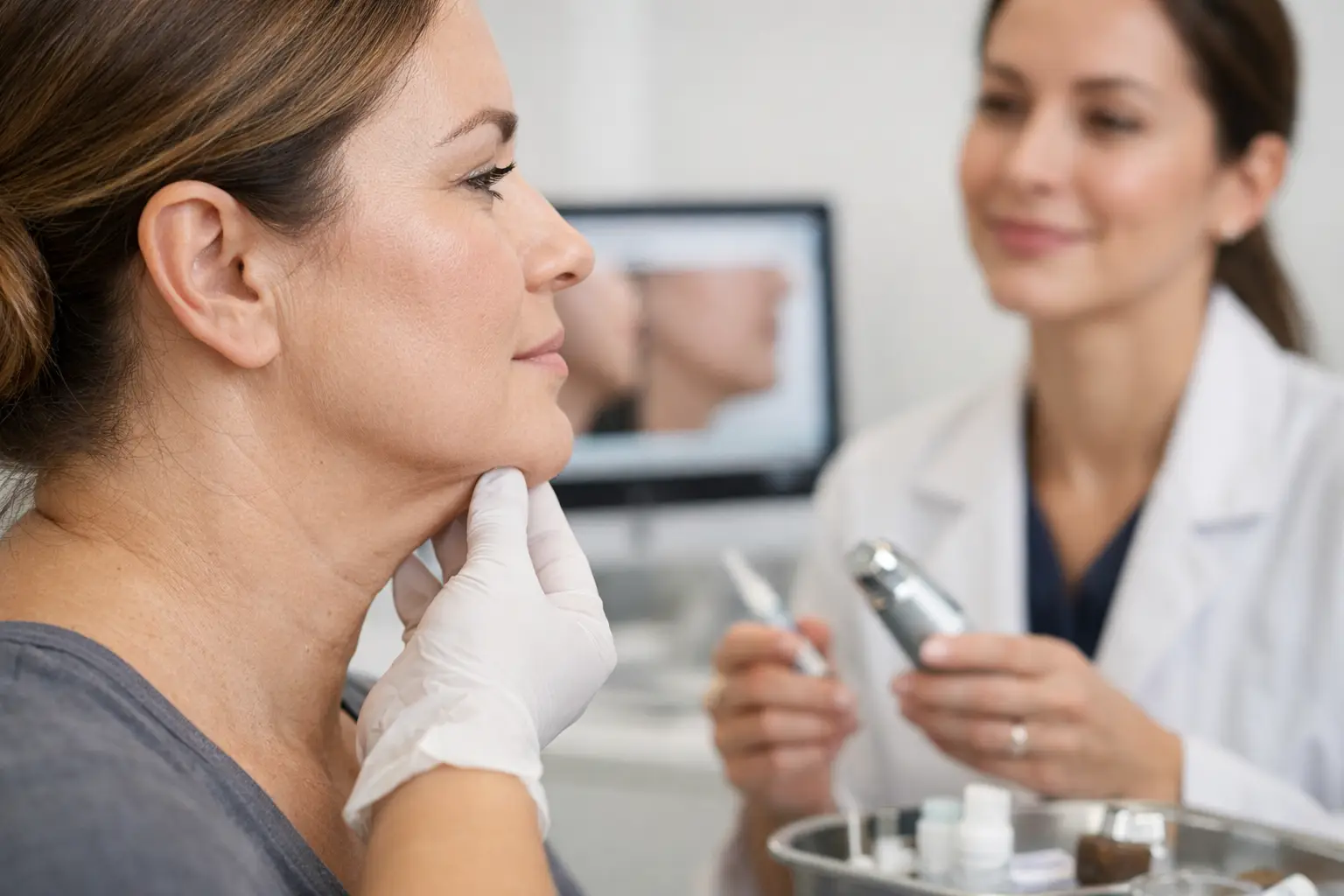
A fuller area beneath the chin can change the balance of the entire profile, even when the rest of the face feels lean and defined. Many people notice it in photographs, video calls, or side views and find that diet and exercise alone do not always change it. Understanding how double chin reduction works can make it easier to choose a treatment that feels aligned with your features, comfort level, and goals.
A double chin, medically described as submental fullness, is common at many ages and body types. Modern nonsurgical treatments are designed to reduce stubborn fat, improve skin firmness, or address both concerns with a personalized approach. The goal is not to create an artificial or overly sharp look. It is to refine the jawline while preserving the natural character of your face.
How Double Chin Reduction Works Beneath the Skin
The area under the chin is shaped by more than fat alone. It may also be affected by skin laxity, genetics, facial anatomy, posture, and age-related changes in collagen. That is why an effective treatment plan begins with identifying what is creating the fullness in the first place.
When excess fat is the primary concern, certain nonsurgical treatments work by damaging or disrupting fat cells beneath the skin. The body then gradually processes and clears those cells through its natural metabolic pathways. Because the change happens over time, results tend to emerge gradually rather than overnight.
When mild skin looseness is contributing to a less-defined jawline, energy-based treatments can be used to heat the deeper layers of tissue in a controlled way. This process encourages collagen remodeling, which may help the skin appear firmer and better supported. For some clients, combining fat reduction with skin-tightening support offers a more polished result than treating either concern alone.
A careful assessment also helps distinguish submental fullness from concerns that require a different approach. A recessed chin, loose neck skin, enlarged glands, or significant skin laxity may not respond in the same way as a small, localized fat pocket. Precision matters, particularly in an area as visible as the lower face and neck.
Why a Double Chin Can Be So Persistent
Submental fat often has a strong genetic component. Someone can maintain a healthy lifestyle and still carry fullness below the chin because their body naturally stores fat there. Aging can also make the area more noticeable as collagen and elastin decline, allowing skin to sit less tightly along the jawline.
Weight changes can influence the appearance of a double chin, but they are not the entire story. Losing weight may reduce overall facial fullness for some people, while others see little change in the submental area. This is one reason localized aesthetic treatment can be appealing: it addresses a specific concern without asking someone to change their whole body to improve one feature.
Nonsurgical Options for Double Chin Reduction
The right option depends on the amount of fullness, the quality of the skin, your timeline, and your willingness to undergo a series of treatments. During a consultation, a qualified provider should review your medical history, examine the area from multiple angles, and discuss what a realistic improvement looks like for your facial structure.
Injectable fat-reduction treatments
Injectable treatments may be used to target small to moderate pockets of fat beneath the chin. A carefully selected substance is placed into the fat layer using a series of precise injections. It works by breaking down fat cells, which the body gradually clears over the following weeks.
Most clients need more than one session, spaced apart to allow swelling to resolve and the treatment response to develop. The number of sessions varies. A smaller, well-defined pocket may require fewer treatments, while more noticeable fullness may need a longer plan.
Swelling is a normal part of the process and can be significant for a short period, especially after early sessions. Tenderness, numbness, firmness, and bruising can also occur. For this reason, many clients plan injectable double chin reduction around social events, travel, and professional commitments.
Radiofrequency and skin-tightening treatments
Radiofrequency-based treatments deliver controlled heat beneath the surface of the skin. Depending on the technology and treatment plan, they may support collagen production, improve mild laxity, and enhance the contour created by fat reduction. These treatments are often chosen by clients who are concerned that removing volume alone could leave the area looking less firm.
Results develop progressively because collagen remodeling takes time. A series is commonly recommended, and maintenance may be appropriate as the skin continues to age. Radiofrequency can be an excellent complement for the right candidate, but it is not a substitute for meaningful fat reduction when a larger fat pocket is present.
Fat-freezing and other contouring technologies
Some noninvasive contouring technologies use controlled cooling or other forms of energy to affect fat cells under the chin. Treatment suitability depends on whether there is enough pinchable fat, how close the tissue sits to important structures, and the device being considered. These options can appeal to people who prefer a non-injectable approach, although they may still require multiple sessions and gradual patience.
Not every device is appropriate for every person or every degree of submental fullness. The treatment should be selected because it fits your anatomy, not because it is the newest option or promises the fastest transformation.
What Happens During a Personalized Treatment Plan
Your consultation should be as thoughtful as the procedure itself. The provider will evaluate fat distribution, skin elasticity, chin projection, jawline shape, and the symmetry of the lower face. Clear photos may be taken to establish a baseline, since gradual changes can be difficult to notice day by day.
You should also discuss your desired level of improvement. Some people want a subtle refinement that looks especially natural in photos. Others are seeking a more visible jawline contour. Both goals can be valid, but the plan, number of sessions, recovery considerations, and budget may differ.
At Clara Medical Spa, physician-led planning is centered on treatments that respect your natural proportions. Rather than applying a standard protocol, the focus is on selecting an approach that supports a balanced, refreshed appearance.
Before treatment, disclose medications, allergies, previous cosmetic procedures, pregnancy or breastfeeding status, and any history of swallowing problems, nerve conditions, or skin infections in the treatment area. These details help your provider determine whether treatment is appropriate and how to proceed safely.
When Will You See Results?
Double chin reduction is a gradual process. With injectable fat reduction, visible changes commonly develop over several weeks as the body clears treated fat cells. With collagen-stimulating treatments, improvement may continue to build for several months. The pace can feel slower than an immediate cosmetic change, but it often supports a more natural-looking transition.
Once fat cells are eliminated, they do not regenerate. However, the remaining fat cells can still enlarge with significant weight gain. Maintaining a stable weight, wearing sunscreen, and following the recommended treatment schedule can help protect the definition you achieve.
Results also depend on skin quality. If the skin has good elasticity, it may adapt more smoothly as fullness decreases. If there is moderate or advanced laxity, a nonsurgical treatment may improve the contour but may not create the same result as a surgical neck or chin procedure. A reputable provider will be direct about that distinction rather than overpromising.
Safety, Recovery, and Choosing the Right Provider
The chin and neck contain delicate nerves, blood vessels, and structures involved in facial movement. Double chin reduction should be performed by a properly trained medical professional who understands facial anatomy and uses approved, evidence-based techniques.
Temporary swelling, bruising, tenderness, redness, and numbness are possible with many nonsurgical options. Your provider should explain the expected recovery window, aftercare instructions, warning signs to watch for, and when you can safely return to exercise, makeup, and social activities. Follow-up visits allow your progress to be assessed and your plan adjusted if needed.
The most beautiful result is one that looks like you, only more defined. A private consultation can clarify whether your concern is fat, skin laxity, or a combination of both, then turn that insight into a treatment plan you can feel confident about.