

Joseph Ahmadi

Medically reviewed by Dr. Mo Maghaddasi, Medical Director at Clara Med Spa.
Last updated: August 11, 2026
A smoother under-eye, softer smile lines, or a more defined jawline can make you look refreshed without changing what makes your face yours. One of the first questions patients ask is how long do facial dermal fillers last, and the honest answer is that it depends on the product used, the area treated, and how your body naturally metabolizes filler.
At Clara Medical Spa in Thornhill, our dermal filler and facial contouring treatments serve clients from Thornhill, Vaughan, Richmond Hill, and across the GTA, and we can explain how long facial dermal fillers last.
That said, there are reliable ranges you can expect. Some fillers may last around 6 months, while others can maintain structure for 12 to 24 months or longer in certain areas. The key is understanding that filler longevity is not just about the syringe. It is about choosing the right product for the right part of the face, with a treatment plan designed for natural, balanced results.
How long do facial dermal fillers last by area?
Different parts of the face move differently, hold product differently, and age differently. That is why the same filler may not last equally in the lips and cheeks.
Lips
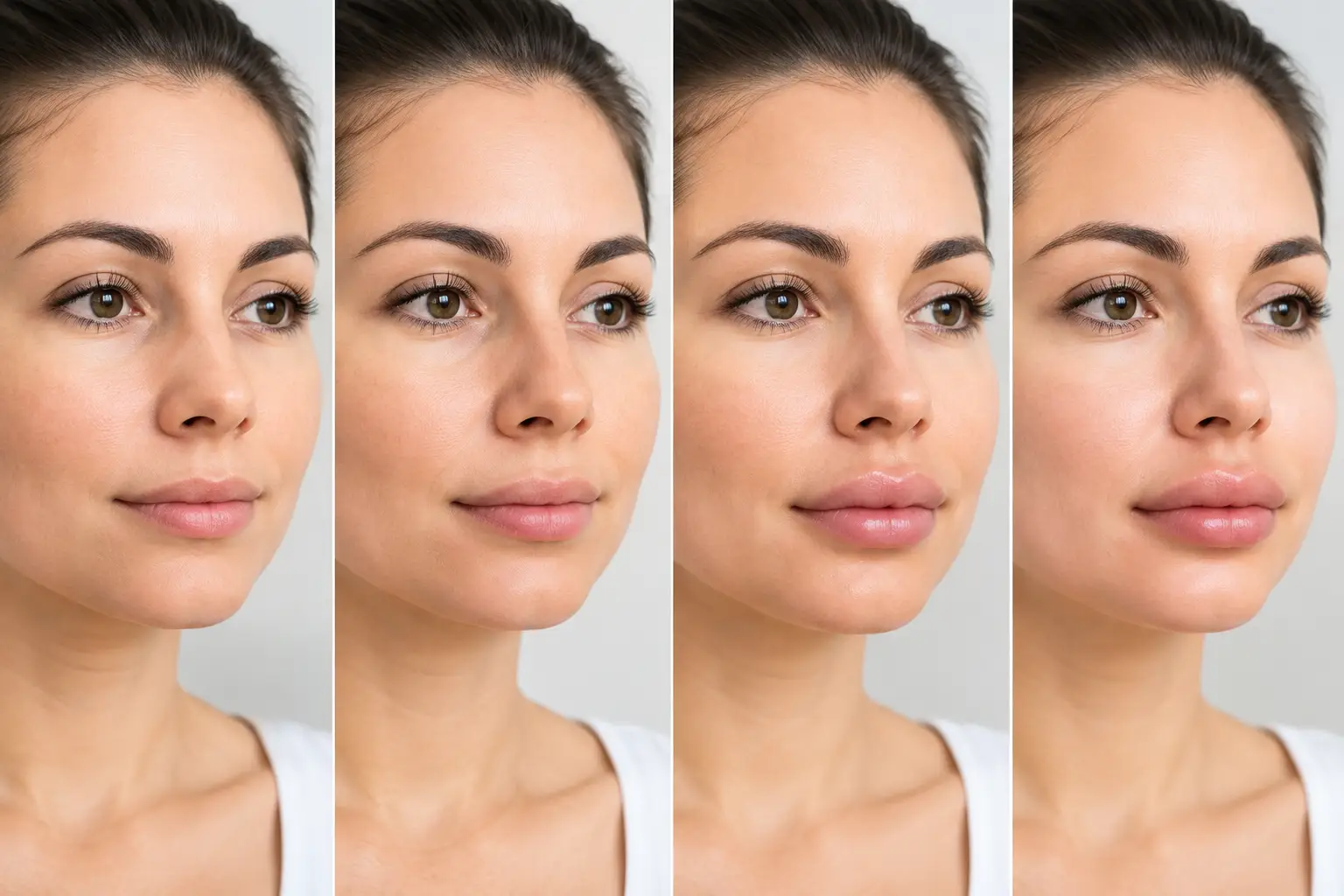
Lip filler usually has one of the shorter timelines. Most patients can expect results to last about 6 to 12 months. The lips are a highly mobile area, and everyday movement from talking, eating, and smiling can cause filler to break down faster.
The type of look you want matters too. A soft, subtle enhancement often uses a flexible filler that integrates beautifully into the lips, but it may not last as long as a firmer product used elsewhere.
Cheeks
Cheek filler often lasts 12 to 24 months. This area tends to hold filler well because the product is usually placed deeper to restore volume and support facial contours. Cheek enhancement can also create a lifting effect that improves the mid-face in a refined, natural-looking way.
Because cheeks are less mobile than lips, the product often remains stable longer. Even so, your metabolism and the specific filler chosen still make a difference.
Nasolabial folds and marionette lines
Fillers used around the smile lines and corners of the mouth generally last about 9 to 18 months. These areas are moderately active, so longevity sits somewhere between lips and cheeks.
For many patients, these lines are not just about the fold itself. They are related to volume loss in the cheeks and lower face. Treating the source of the issue, rather than only filling the line, often leads to more elegant and longer-lasting results.
Under-eyes
Tear trough filler can last 9 to 18 months, and in some patients it may appear to last even longer. This area is delicate and requires careful product selection and advanced technique. Because under-eye filler is placed in a zone with less movement, it may break down more slowly.
At the same time, this is not an area for overcorrection. Precision matters more than volume, and subtle treatment tends to age better.
Jawline and chin
Jawline and chin fillers often last 12 to 24 months. These areas typically benefit from firmer fillers designed to provide structure and definition. Because the product is often placed more deeply and strategically, patients can enjoy longer-lasting contouring.
This is especially appealing for those who want a sharper profile or improved facial balance without surgery, making it a highly requested treatment at our Thornhill clinic. Strong results still need restraint, though.

What affects how long facial dermal fillers last?
Filler longevity is not the same from one patient to the next. Two people can receive the same product in the same area and still see different timelines.
The type of filler used
Not all dermal fillers are made the same. Hyaluronic acid fillers are among the most popular because they feel soft, look natural, and can be adjusted or dissolved if needed. Within that category, some are thinner and more flexible, while others are denser and built for structural support.
Thinner fillers are often chosen for delicate areas or softer refinement. Denser fillers are better for cheeks, chin, and jawline, where shape and lift matter. In general, firmer fillers tend to last longer than softer ones.
Your metabolism
Some people simply metabolize filler faster. If you are very active, have a naturally fast metabolism, or have had filler fade quickly in the past, your results may not last as long as average.
This is not a sign that treatment failed. It is just part of how your body processes the product. A personalized maintenance schedule usually works better than expecting one standard timeline.
The movement in the treated area
The more a facial area moves, the faster filler often breaks down. Lips and mouth-adjacent areas are in constant motion. Cheeks and temples usually experience less movement, so filler may last longer there.
This is one reason experienced injectors do not approach every area with the same formula. Anatomy and function matter just as much as aesthetics.
Injection technique and placement
Well-placed filler tends to perform better and look better. Product that is injected at the appropriate depth, in the right amount, and with a clear understanding of facial balance is more likely to settle smoothly and support a natural result.
Technique also matters for safety. In a physician-led setting, treatment planning should consider not only how long the filler may last, but how it will age with your expression, skin quality, and facial proportions.
Your treatment history
Patients who maintain filler consistently sometimes notice that they need less product over time to keep their look refreshed. This does not necessarily mean old filler never leaves. It usually means their provider is maintaining structure before volume loss becomes more visible again.
A thoughtful maintenance approach often produces the most polished result because it avoids the cycle of waiting too long, then trying to correct everything at once.
How long do facial dermal fillers last compared with what you see in the mirror?
This is where expectations need a little nuance. A filler may still be present in the tissue even after the most noticeable cosmetic effect has softened. In other words, the product can remain while the visible improvement becomes less dramatic.
That happens because aging continues. Skin changes, collagen shifts, and facial movement do not pause after treatment. So when patients say their filler is gone, they may really mean they no longer look as refreshed as they did in the first few months.
This is why follow-up matters. An expert assessment can tell you whether you need more filler, a different filler, or a different treatment entirely. Sometimes the best next step is not more volume. It may be skin tightening, laser rejuvenation, or a collagen-stimulating treatment to support the results more comprehensively.
When should you book maintenance?
A good rule is to think about maintenance before your filler disappears completely. For lips, that may mean reassessing around the 6- to 9-month mark. For cheeks, chin, or jawline, it may be closer to 12 to 18 months.
The best timing depends on your goals. If you prefer a consistently polished appearance, smaller touch-ups at the right interval often look more refined than waiting for a full correction. If you are newer to fillers and want a conservative approach, it is perfectly reasonable to let results fade naturally and reassess from there.
At Clara Medical Spa in Vaughan, Ontario, this kind of decision is best made during a personalized consultation. Whether you are coming from Thornhill or the surrounding GTA, our experts will review your facial anatomy, treatment history, and aesthetic goals together.
How to make filler results last longer
You cannot stop your body from metabolizing filler, but you can support better longevity with smart treatment choices. Choosing the right injector is the biggest factor. Beyond that, protecting skin quality, staying consistent with maintenance, and avoiding overfilling all help preserve a fresher look over time.
Healthy skin also frames filler results more beautifully. When the skin is hydrated, supported with appropriate medical-grade care, and protected from excessive sun exposure, your overall result tends to look better even as filler gradually softens.
A realistic way to think about filler longevity
If you are asking how long do facial dermal fillers last, the most useful answer is this: long enough to make a meaningful difference, but not so permanent that you lose flexibility. Most patients appreciate that balance. You can refresh volume, contour, and softness now, then adjust later as your features and preferences evolve.
The most beautiful filler results are rarely the ones that announce themselves. They are the ones that make you look rested, balanced, and quietly confident. When your treatment plan is personalized and medically guided, longevity becomes only one part of the story, and not the most important one. Ready to explore your options? Book a consultation with our expert injectors in Vaughan today.
Explore our dermal fillers in Thornhill and see the price list.
Frequently Asked Questions
Where can I get dermal fillers in Thornhill?
Clara Medical Spa is located at 1 Promenade Cir in Thornhill, inside the Promenade Shopping Centre, and treats clients from Thornhill, Vaughan, Richmond Hill, and the greater Toronto area.
How much do dermal fillers cost at Clara Medical Spa?
Fillers start at $300 per syringe. The number of syringes depends on your goals and anatomy, and your injector will give a clear estimate at your free consultation.
How long do dermal fillers last?
Duration depends on the product, area treated and your metabolism.
When should I top up?
Your injector will advise on timing to keep results natural.
Related treatments & reading




[…] Dermal filler can enhance angles and structure but usually adds volume rather than reducing it. Skin tightening treatments can improve firmness but do not shrink enlarged chewing muscles. Surgical jaw reduction is far more dramatic and permanent, but it also comes with significantly more cost, recovery, and commitment. […]
[…] reason facial contouring fillers remain so popular is that results are visible quickly. You can often leave the appointment looking […]
[…] How Long Do Facial Dermal Fillers Last? […]