
Joseph Ahmadi

Medically reviewed by Dr. Mo Maghaddasi, Medical Director at Clara Med Spa.
Last updated: August 11, 2026
You may notice it first in photos – a softer jawline, flatter cheeks, or shadows that make the face look more tired than you feel. That is often where a guide to facial contouring fillers becomes useful. Done well, filler is not about changing who you are. It is about refining structure, restoring proportion, and creating natural-looking definition that still feels like you.
At Clara Medical Spa in Thornhill, our dermal filler and facial contouring treatments serve clients from Thornhill, Vaughan, Richmond Hill, and across the GTA, including contouring filler for the cheeks, chin and jawline.
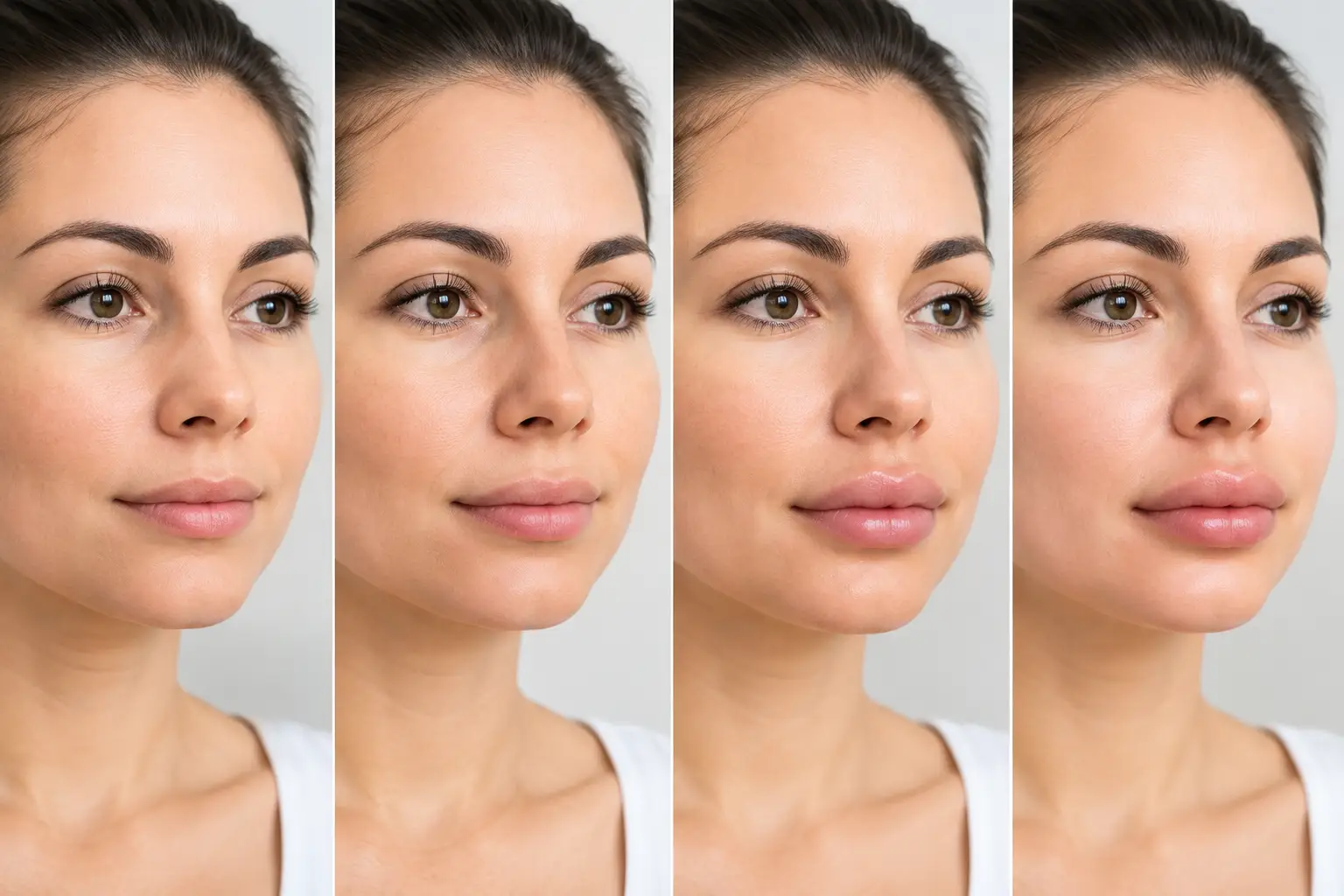
Facial contouring fillers are injectable treatments used to add volume, improve shape, and enhance balance in key areas of the face. Unlike treatments that relax muscle movement, fillers work by supporting facial contours. They can sharpen the jawline, lift the cheeks, improve chin projection, soften hollow areas, and bring harmony to features that may have changed with age or were never ideally balanced to begin with.
At a medically led aesthetic clinic, the goal is not to chase trends or create exaggerated angles. The goal is to assess the whole face and recommend a plan that suits your anatomy, skin quality, and desired outcome. That is where good contouring becomes both a science and an art.
What facial contouring fillers actually do
Facial contouring fillers are most often made from hyaluronic acid, a substance naturally found in the body. Certain formulas are designed to attract moisture and soften lines, while others are firmer and better suited for structural support. For contouring, the product selection matters just as much as the injection technique.
A cheek treatment, for example, may create lift and improve midface support, which can also reduce heaviness around the lower face. Chin filler can increase projection and make the profile look more balanced. Jawline filler can add definition along the lower face and reduce the appearance of jowling in some patients. In the temples, filler may restore fullness and smooth a hollowed look that often appears with age.
The key point is that contouring is rarely about one isolated feature. When performed thoughtfully, it improves the relationship between features.

A guide to facial contouring fillers by treatment area
The cheeks are one of the most common starting points because they influence the rest of the face. Volume loss in this area can create a tired appearance and contribute to nasolabial folds or lower face heaviness. Restoring cheek structure often makes the face look fresher without making it look filled.
The jawline is another popular area, especially for patients who want a more polished, defined lower face. This can be particularly effective for mild early jowling or for people who naturally have less jawline definition. That said, results depend on skin laxity. If looseness is more advanced, filler alone may not give a crisp result.
The chin plays a surprisingly important role in facial balance. A recessed chin can make the nose appear more prominent and the jawline less distinct. Adding projection here can strengthen the profile and create a more harmonious appearance from both the front and side.
The temples are often overlooked, but they matter. Hollow temples can make the upper face look gaunt and aged. Restoring this area can soften the transition from forehead to cheek and create a healthier, more rested look.
In some cases, contouring also includes the under-eye area, the pre-jowl region, or around the mouth. These areas require precision and careful patient selection. More product is not always better.
Who is a good candidate?
The best candidates are adults who want subtle, non-surgical improvement in facial shape, support, or symmetry. Some are younger and interested in definition – such as a stronger chin or more sculpted cheeks. Others are noticing age-related volume loss and want to look less tired or less drawn.
Good candidacy depends on more than age. Skin thickness, bone structure, facial movement, and the degree of laxity all affect what filler can achieve. Expectations matter too. If someone wants dramatic lifting without surgery, filler may not be the right answer. If someone wants refined enhancement with little downtime, it can be an excellent option.
This is why consultation matters. A personalized assessment should look at the full face rather than just the area that bothers you most. Sometimes the feature you want to fix is actually being influenced by volume loss somewhere else.
What to expect during treatment
A well-planned appointment starts with facial analysis, medical history, and a discussion about your goals. Photos may be taken to assess proportions and track progress. From there, your provider determines whether contouring is best done in one visit or in stages.
The treatment itself is usually straightforward. The area is cleansed, mapped, and injected with a needle or cannula depending on the region and technique. Many fillers contain lidocaine to improve comfort. Most patients describe the experience as manageable, with pressure or brief pinching rather than significant pain.
After treatment, mild swelling, tenderness, and bruising are possible. Some areas, especially the lips or under-eyes, can swell more noticeably than others, while cheek and jawline treatments often settle with less disruption. Final results are not always immediate. You will see early improvement, but the best view usually comes after swelling resolves.
Results, longevity, and maintenance
One reason facial contouring fillers remain so popular is that results are visible quickly. You can often leave the appointment looking more refreshed and defined, though not necessarily camera-ready that same day. The exact longevity depends on the product used, the treatment area, your metabolism, and how much movement the area gets.
As a general rule, structural contouring areas like the cheeks, jawline, and chin may last longer than filler placed in more mobile areas. Some patients maintain their results once or twice a year, while others prefer smaller touch-ups at different intervals.
It is worth knowing that longevity should not be the only priority. A filler that lasts longer is not always the best choice if it does not match the tissue characteristics of the area. Natural-looking results come from using the right product in the right place.
The difference between natural and overdone
This is where experience shows. Beautiful contouring does not announce itself. It brings balance to the face so that people notice you look rested, polished, or more youthful without being able to pinpoint why.
Overdone filler usually happens when treatment is approached feature by feature without considering facial harmony, or when too much product is placed in pursuit of a trend. Sharp cheekbones may look striking on social media but feel out of place in real life if they do not suit the patient’s anatomy. The same applies to an overly projected chin or a heavy jawline.
A refined result often means doing less, then reassessing. Conservative treatment plans tend to age better and photograph better.
Safety and why injector expertise matters
Fillers are medical treatments, not casual beauty services. Technique, product knowledge, anatomy, and judgment all affect safety and outcome. The face contains complex vascular structures, and every treatment area carries its own considerations.
That does not mean patients should feel anxious. It means they should choose care thoughtfully. An experienced injector will explain what is realistic, review risks, and know when filler is appropriate and when another treatment may be a better fit. In a physician-led setting, this level of oversight adds confidence, especially for patients who are new to injectables or treating higher-risk areas.
Safety also includes restraint. A provider who says no to unnecessary filler is often the one most focused on your long-term appearance.
How to prepare for your consultation
If you are considering treatment, come in with a clear sense of what you want to improve, but stay open to professional guidance. You may be focused on smile lines, for example, when the real issue is midface volume loss. Bringing reference photos of yourself from a few years ago can be more useful than celebrity inspiration because it helps define what looks natural for your face.
It also helps to discuss timing. If you have a major event coming up, give yourself enough room for swelling or bruising to settle. And if you are new to fillers, a gradual approach is often the smartest one.
At Clara Medical Spa, facial contouring is approached with that balance in mind – elegant enhancement, medical precision, and results that look believable in everyday life.
The best filler work does not give you a different face. It gives your features the structure, support, and proportion to look like your best self again.
Explore our dermal fillers in Thornhill and see the price list.
Frequently Asked Questions
Where can I get dermal fillers in Thornhill?
Clara Medical Spa is located at 1 Promenade Cir in Thornhill, inside the Promenade Shopping Centre, and treats clients from Thornhill, Vaughan, Richmond Hill, and the greater Toronto area.
How much do dermal fillers cost at Clara Medical Spa?
Fillers start at $300 per syringe. The number of syringes depends on your goals and anatomy, and your injector will give a clear estimate at your free consultation.
What areas can facial contouring fillers treat?
Common areas include cheeks, chin, jawline and temples. Your injector will recommend areas based on your proportions.
Will contouring filler look natural?
With conservative planning and careful placement, results can look balanced and natural.
Related treatments & reading

[…] Botox addresses the muscle movement contributing to expression lines. It does not replace lost facial volume, resurface texture, or correct every sign of aging on its […]
[…] or correct every type of wrinkle. If hollowing in the cheeks or under-eyes is the main concern, dermal filler or collagen-stimulating treatments may be more appropriate. If sun spots, acne scars, or uneven […]