
Joseph Ahmadi
Medically reviewed by Dr. Mo Maghaddasi, Medical Director at Clara Med Spa.
Last updated: August 11, 2026
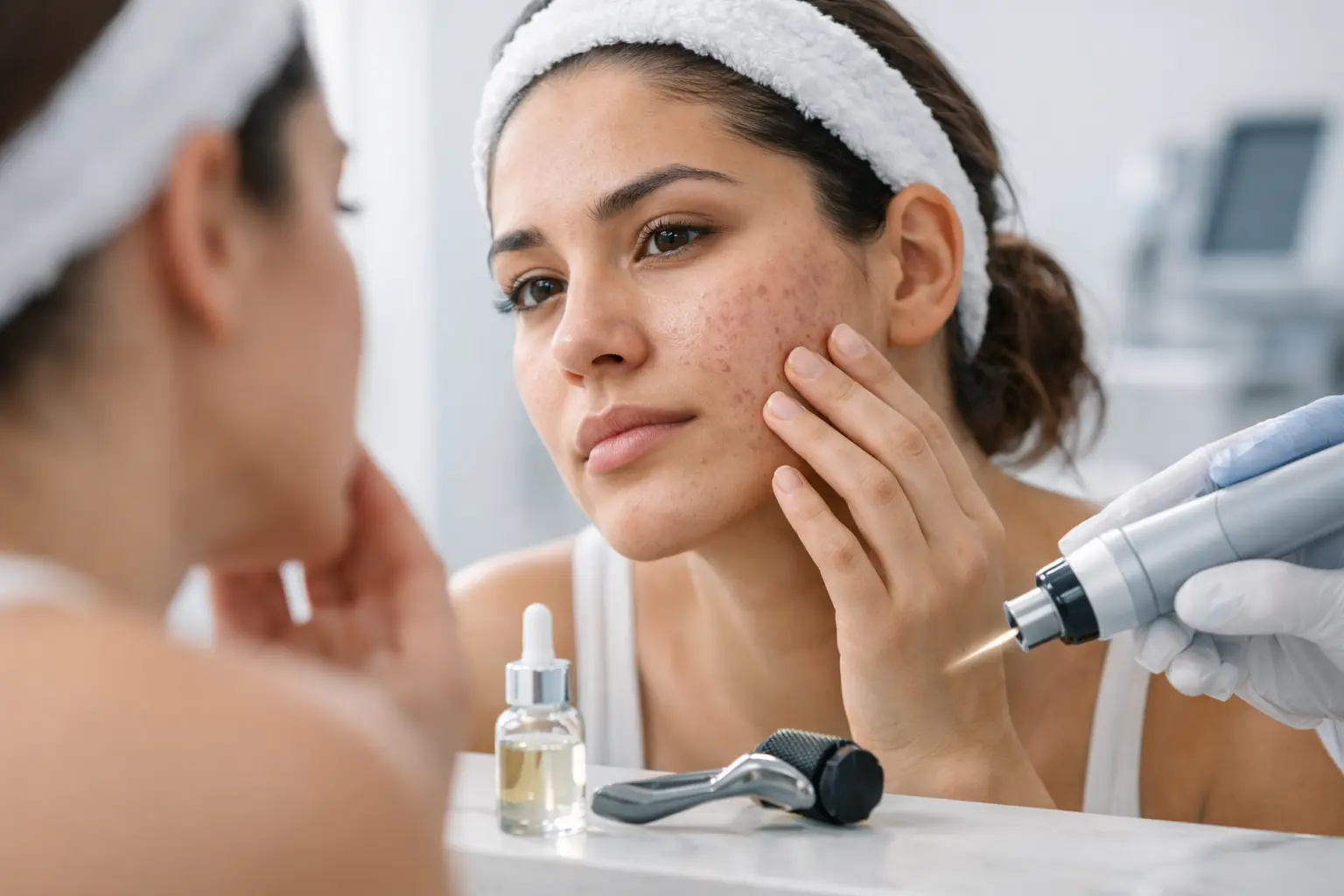
A smooth layer of foundation can blur discoloration, but texture tells the truth. If acne left behind indentations, uneven skin, or marks that catch the light, finding the best treatment for acne scars is usually less about one miracle procedure and more about choosing the right treatment for the exact type of scar you have.
At Clara Medical Spa in Thornhill, we work with patients from Thornhill, Vaughan, Richmond Hill, and across the greater Toronto area who are asking exactly this question, which is why every plan starts with identifying scar type before recommending anything.
That distinction matters. Acne scars are not all the same, and the treatment that softens one person’s rolling scars may do very little for someone with deep ice pick scars. The most successful plans are personalized, clinically guided, and built around skin type, scar depth, downtime tolerance, and the result you want to see in the mirror.
What actually works as the best treatment for acne scars?
The honest answer is that there is no single best treatment for acne scars for everyone. There is, however, a best approach for your skin.
At a medical aesthetics clinic, acne scar treatment usually starts by identifying whether you are dealing with atrophic scars, post-inflammatory discoloration, or a combination of both. Atrophic scars are the indented scars most people mean when they talk about acne scarring. These include ice pick scars, boxcar scars, and rolling scars. Discoloration, on the other hand, may look like a scar from a distance but often responds to a different category of treatment.
Once that is clear, the treatment plan becomes much more precise. In many cases, the strongest outcomes come from combining treatments rather than relying on one session of one device.
The best treatment for acne scars depends on scar type
Microneedling for mild to moderate textural scarring
Microneedling is one of the most popular treatments for acne scars because it stimulates collagen in a controlled, gradual way. Tiny channels are created in the skin, which encourages repair and helps soften shallow boxcar scars and some rolling scars over time.
For patients who want improvement with relatively manageable downtime, microneedling is often an excellent place to start. It can also be paired with advanced topical support such as exosome therapy to enhance skin recovery and overall rejuvenation. The results are not instant, and that is part of the trade-off. Microneedling rewards consistency. A series of treatments usually delivers much better improvement than a single visit.
RF microneedling for texture plus tightening
When acne scarring is paired with early skin laxity or more stubborn textural irregularity, RF microneedling can offer an added advantage. This treatment combines traditional microneedling with radiofrequency energy delivered into the skin, which supports deeper remodeling.
Patients often choose RF microneedling when they want a more intensive collagen-stimulating treatment without moving into more aggressive resurfacing. It can be especially useful for adults who are not only treating scars but also hoping to improve skin firmness and refinement at the same time.
Chemical peels for pigment and surface irregularity
Not every post-acne mark is a true scar. If your main concern is lingering brown, red, or uneven patches after breakouts, a chemical peel may be part of the best treatment plan. Peels can improve tone, brighten dull skin, and help with superficial irregularity.
This is where professional evaluation matters. Deep indented scars do not disappear with a peel alone, but discoloration and roughness often improve significantly. For many patients, peels work best as part of a larger program that addresses both pigment and texture.
Laser treatments for resurfacing and collagen renewal
Laser-based treatments can be highly effective for acne scar revision, particularly when the goal is smoother texture and more visible resurfacing. Some lasers target redness or pigmentation, while others focus on stimulating collagen and improving the appearance of indented scars.
Laser treatment is not one-size-fits-all. The best device depends on your skin tone, the depth of your scars, and how much downtime you can realistically accommodate. More aggressive resurfacing may bring stronger results, but it also requires a longer recovery and more careful aftercare. For some patients, a gentler series is the better choice because it fits their lifestyle and still delivers meaningful improvement.
Subcision for rolling scars
Rolling scars often form because fibrous bands pull the skin downward. In those cases, simply resurfacing the skin from above may not be enough. Subcision is a technique that releases those tethered bands beneath the surface, allowing the skin to lift and heal more smoothly.
This treatment is especially valuable when scars look like soft depressions or shadows rather than narrow puncture marks. It is often combined with collagen-stimulating treatments for a more complete result. If rolling scars are your main concern, subcision can be one of the most important parts of the plan.
TCA CROSS for deep ice pick scars
Ice pick scars are narrow, deep, and typically the hardest to treat with standard resurfacing alone. TCA CROSS uses a concentrated acid applied directly into the scar to trigger remodeling in a very targeted way.
It is not the right treatment for every scar pattern, but for true ice pick scars, it can be remarkably useful. It also requires expertise, patience, and multiple sessions. Improvement tends to be progressive rather than dramatic after one appointment.
Dermal filler for selected depressed scars
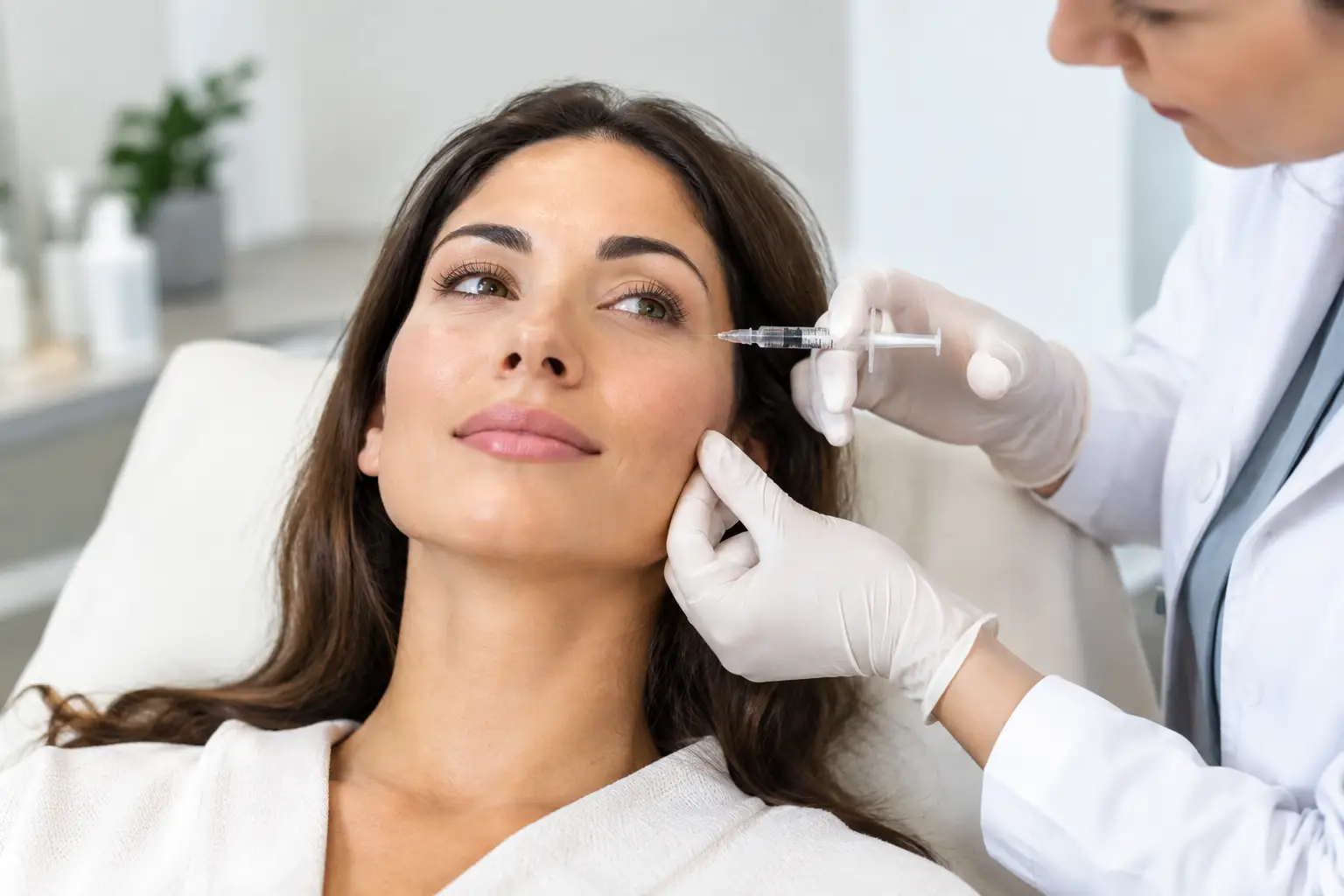
In certain cases, a depressed acne scar can be improved with dermal filler. This approach does not treat the scar by resurfacing it. Instead, it lifts the depressed area to make the skin appear more even.
The benefit is that results can be visible quickly. The trade-off is that not all scars are suitable, and some fillers are temporary. For carefully selected patients, filler can be an elegant part of a broader acne scar correction plan.
Why combination treatment usually gives the best results
Acne scars are often layered. You may have rolling scars on the cheeks, a few ice pick scars near the temples, redness from old breakouts, and uneven texture across the skin. That is why one treatment alone often falls short.
A thoughtful combination plan may include subcision to release tethering, microneedling or RF microneedling to build collagen, and peels or laser treatments to improve tone and surface quality. This kind of approach is more customized, and it usually leads to more natural-looking improvement because each tool is being used for the problem it treats best.
At Clara Medical Spa, that physician-led, personalized approach is exactly what helps patients move beyond trial and error.
How long does it take to see improvement?
Most acne scar treatments work by stimulating the skin to remodel itself, and that process takes time. Some treatments create an early glow once healing begins, but true scar improvement is usually gradual. Many patients notice the most meaningful changes after a series of treatments spaced over several months.
That can feel slow, especially if you have dealt with acne for years. Still, gradual improvement often produces the most refined results. The skin looks healthier, smoother, and more even without appearing overtreated.
What to consider before choosing a treatment
The best treatment plan is not just about what is most powerful on paper. It also has to fit your skin and your life.
Skin tone matters because some lasers and stronger resurfacing procedures carry a higher risk of post-inflammatory pigmentation in deeper skin tones. Downtime matters because redness, peeling, or swelling may be easy for one patient to manage and completely unrealistic for another. Budget matters too, since acne scar correction often works best as a series rather than a single visit.
And expectations matter. Most professional treatments can significantly improve acne scars, but very few erase them completely. The goal is usually smoother texture, softer edges, less shadowing, and skin that looks healthier and more even in natural light.
When to start treatment
If you are still having active breakouts, acne control should come first. Treating scars while new blemishes are continuing to inflame the skin can be frustrating and less efficient. Once acne is stable, scar-focused treatment becomes much more rewarding.
It is also wise to start sooner rather than later if scars are affecting your confidence. While older scars can absolutely be treated, early intervention often helps prevent years of trying to camouflage texture with makeup, lighting, or photo angles.
The best next step is a professional assessment
If you have been searching for the best treatment for acne scars, the most useful answer is not a trend on social media or a device name pulled from a headline. It is a careful assessment of your scar type, skin quality, and goals, followed by a plan that is tailored to you.
Beautiful results in acne scar treatment rarely come from chasing the most aggressive option. They come from choosing the right option, at the right depth, in the right sequence, with expert guidance. When that happens, improvement looks natural, polished, and truly worth the effort.
Your skin does not need perfection to look refined and confident. It needs the kind of treatment plan that respects both science and individuality.
How Much Does Acne Scar Treatment Cost in Thornhill?
Pricing depends on which treatments your scars need. RF (face) sessions start at $150, and most patients need a series of 3–5 sessions for a noticeable, lasting result — a pattern that holds across most acne scar modalities, not just ours. More targeted treatments such as subcision, TCA CROSS, and combination laser plans are quoted after a free consultation, since the right plan depends on your scar type, depth, and skin tone. There is no cost to find out what your plan would look like.
Frequently Asked Questions
Where can I get acne scar treatment near Thornhill?
Clara Medical Spa is located at 1 Promenade Cir in Thornhill and treats patients from Thornhill, Vaughan, Richmond Hill, and across the greater Toronto area. Our physician-led team offers microneedling, RF microneedling, subcision, chemical peels, laser resurfacing, and TCA CROSS, tailored to your specific scar type.
How much does acne scar treatment cost in the GTA?
RF (face) sessions start at $150, with most patients needing 3–5 sessions. More targeted treatments like subcision and TCA CROSS are priced after a free consultation, since the right combination depends on your scars.
What is the best acne scar treatment for deep ice pick scars?
TCA CROSS is generally the most effective option for true ice pick scars, often paired with microneedling or RF microneedling to improve the surrounding texture.
How soon will I see results from acne scar treatment?
Most patients notice improvement within a few weeks, with the fullest results developing over several months as new collagen builds.

[…] your uneven tone is mostly surface-level sun damage or post-breakout marks, you may see noticeable changes relatively quickly. If hormones are driving the discoloration, […]
[…] Explore our acne scar treatment in Thornhill and our guide to the best treatment for acne scars. […]